


The victim of an alleged assault at an Ottawa transit station in August is questioning why the incident was not publicly disclosed despite being probed by the hate and bias crime unit of the Ottawa Police Service (OPS).
Arfon Barow, a 64-year-old Muslim woman who wears a hijab, sustained injuries in the Aug. 25 attack at Blair station, which she says are still healing almost two months later.
Expressing her desire for people to understand her suffering, Barow, speaking in Somali through interpreter Abdirizak Mohamud, the director of the Suradway Parents’ Association of Ottawa, stated, “With all the evidence and images available, it should be evident that I was seriously hurt in this incident, and the public should be alerted that such occurrences are taking place.”
Despite the incident, neither the police nor OC Transpo released any public statements at the time of the assault.
Mohamud emphasized the significance of reporting such incidents, particularly within a community where confidence in local authorities is already fragile. He stated, “Trust has been a recurring issue. I believe that transparency and a consistent response to these incidents are crucial for building trust.”

Assault at Blair station
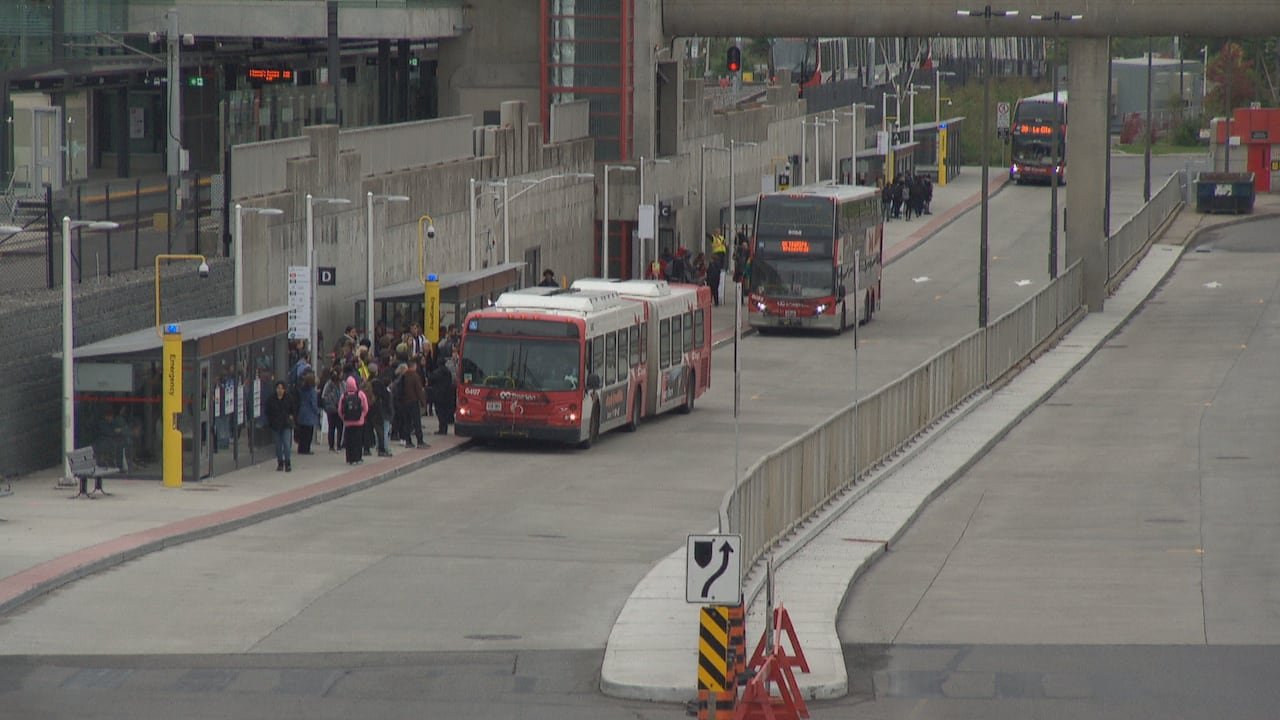
Ottawa police informed CBC that on Aug. 25, special constables were called to the 1200 block of Blair Road in response to a reported assault. Subsequently, the hate and bias crime unit took over the investigation, resulting in the charging of a 49-year-old woman with assault causing bodily harm.
Barow recounted an ordeal where a woman on an OC Transpo bus was yelling at her and filming her. Upon Barow’s arrival at Blair station for a bus transfer, the woman pursued her and initiated the assault.
Describing the attack, Barow, through the interpreter, said, “She followed me off the bus and began attacking me without any provocation. Despite the presence of many people, no one intervened.”
After managing to escape the assailant, Barow was left with severe injuries. The perpetrator then boarded another bus.
Reflecting on the incident, Barow shared, “With my head uncovered, torn clothes, broken glasses, and a bloody face, I boarded the bus and instructed the driver not to move, urging them to contact security.”
Following the assault, Barow was hospitalized for treatment. However, nearly two months later, she continues to struggle with everyday tasks, experiencing breathing difficulties and left arm pain. A visible dent remained on her forehead when interviewed by a CBC reporter in October.
Throughout her recovery, Barow anxiously monitored news outlets, anticipating coverage of the assault.
Expressing her disappointment at the lack of public attention to her attack compared to other hate-motivated incidents that received widespread coverage, Barow remarked, “It seems that they intentionally kept this incident under wraps. I believe they are concealing what happened.”
A ‘catch-22’ for police
Although Ottawa police declined an interview request regarding the incident, they clarified in a statement that they do not publicize every hate-related investigation they conduct.
While OPS routinely publicizes investigations into suspected hate-motivated incidents, such as a recent case where a hijab-wearing woman was assaulted at a gas station, they choose not to disclose all cases based on considerations of privacy, the necessity to protect the investigation, and the requirement for public assistance.
Mohamud highlighted the inconsistency in