

The director of the Louvre museum revealed plans on Wednesday to enhance security measures following a recent high-profile jewel theft. Laurence des Cars announced the upcoming installation of approximately 100 new surveillance cameras by the end of next year, alongside the implementation of anti-intrusion systems within the next two weeks.
Describing the new systems as tools to deter potential intruders from approaching the museum buildings, des Cars emphasized the importance of ensuring comprehensive protection for the museum’s surroundings. These measures are part of a larger initiative that includes the introduction of over 20 security enhancements.
Among the new security measures is the creation of a “security co-ordinator” role at the museum, with the position already advertised this month. The recent jewel heist, where thieves made off with crown jewels valued at 88 million euros within minutes, prompted a reevaluation of security protocols.
Des Cars disclosed that the robbers used disc cutters meant for concrete to breach the display cases during the heist, a method that was not previously considered. Despite the breach, the display cases held up well, as seen in footage from museum cameras, indicating the difficulty faced by the thieves during the robbery.
The security improvements are part of the “Louvre New Renaissance” plan launched earlier this year, aimed at revitalizing the museum’s infrastructure and enhancing visitor experience. The plan, with an estimated cost of up to 800 million euros, also includes initiatives to address overcrowding and provide a dedicated gallery for the iconic Mona Lisa by 2031.
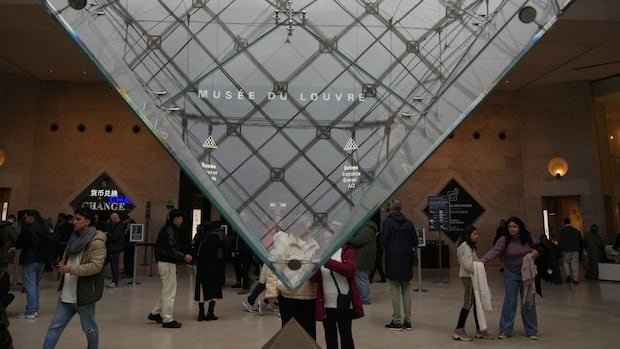
As part of efforts to manage the impact of mass tourism on the Louvre, visitor numbers have been capped at 30,000 per day in recent years. Des Cars highlighted the strain on the museum’s facilities, noting that the current infrastructure, including the iconic glass pyramid completed in 1989, is outdated and in need of modernization.
In response to structural concerns, the Louvre recently announced the temporary closure of certain employee offices and a public gallery. Des Cars emphasized the urgent need to upgrade the museum’s facilities, stating that the existing equipment, which has been in use for over four decades, is now technologically obsolete.