
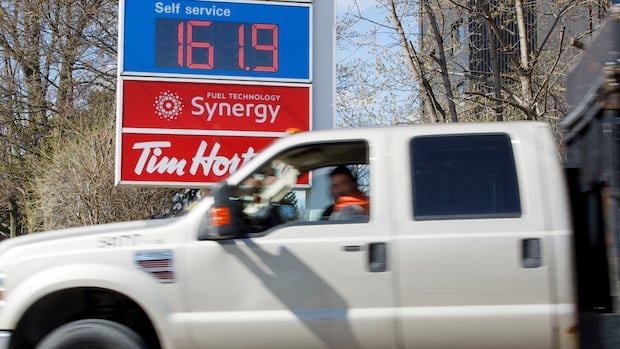

Canada’s annual inflation rate increased to 3.1 percent in September, as per Statistics Canada’s report on Monday. This rise was driven by a surge in gasoline prices due to the Middle East conflict. Even with the shift to cheaper winter gasoline blends providing some relief, pump prices soared by 27.8 percent year-over-year, following a 22.8 percent increase in August. Benchmark oil prices reached their highest point since May due to ongoing tensions in the Middle East.
In addition to gasoline, grocery prices also saw a rise of 1.7 percent year over year, although this was lower compared to the 2.8 percent increase in August. The smallest yearly increase since May 2024 was observed in September, attributed to the decline in prices of fresh vegetables and the “sugar and confectionary” category.
Despite the slowdown in grocery prices year-over-year, Statistics Canada noted that prices have gone up by 33.0 percent since September 2020. Shelter prices also saw an increase of 1.8 percent year over year, up from 1.5 percent in August.
Statistics Canada reported a slight easing in core inflation measures on a monthly basis in September. These measures, which exclude extreme price fluctuations, are closely monitored by the Bank of Canada. Bank of Canada Governor Tiff Macklem cautioned that the persistent high global energy prices resulting from the Middle East conflict could impact the central bank’s inflation outlook prior to its Oct. 28 rate announcement.
A Bloomberg survey of 12 economists predicted a 3.18 percent year-over-year increase in the September consumer price index ahead of the release on Monday. The national inflation rate had remained steady at three percent in August, according to a previous report.