
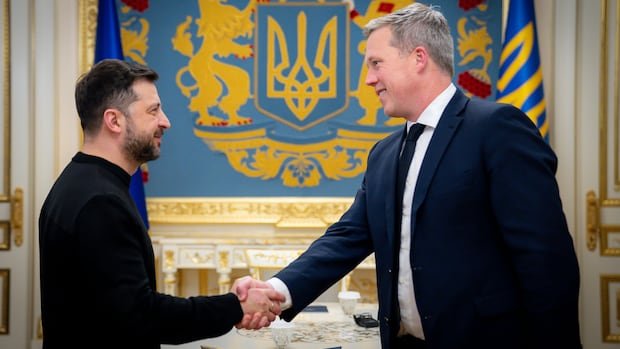

Ukraine stands at a critical juncture in its ongoing battle against Russia’s large-scale invasion, President Volodymyr Zelenskyy informed the nation in a national address on Friday. He vowed to engage in constructive talks with Washington regarding a U.S. peace initiative.
The U.S. proposal aligns with many of Russian President Vladimir Putin’s long-standing requests, which include territorial concessions by Ukraine. However, it offers only limited security assurances to Ukraine. The plan entails Ukraine ceding territory to Russia, downsizing its military, and halting its pursuit of NATO membership, all of which Zelenskyy has consistently opposed.
During a radio interview on Friday, U.S. President Donald Trump mentioned that he expects a response from Zelenskyy on his 28-point plan for Ukraine by Thursday, allowing for a possible extension to finalize the terms. Zelenskyy has expressed willingness to negotiate with both the U.S. and Russia but acknowledged that Ukraine may not achieve all its objectives, possibly risking American support if it takes a firm stance.
The pressure on Ukraine is currently intense, Zelenskyy highlighted in a recorded speech, suggesting that the country faces a challenging decision between compromising its integrity or risking the loss of a crucial ally. He emphasized the importance of fair treatment and insisted that Ukraine’s national interests must be considered.
While acknowledging U.S. efforts to resolve the conflict, European leaders, including Germany, France, and the United Kingdom, assured Zelenskyy of their unwavering support. Their responses were cautiously optimistic, praising American peace initiatives and emphasizing the need to safeguard vital European and Ukrainian interests in the long run.
European Council President Antonio Costa stressed the significance of consulting European countries in peace efforts, asserting that Russia’s aggression against Ukraine poses a grave threat to Europe. He emphasized that any agreement should respect Ukraine’s sovereignty and be determined by Ukraine itself.
The Trump administration’s changing stance towards Zelenskyy has been noted, with a shift from public support to criticisms. Despite this, direct military or humanitarian aid to Ukraine has not been forthcoming from the current administration. Instead, the Trump administration has encouraged European partners and NATO allies to provide military support to Ukraine through purchases from American arms manufacturers.
The recent developments come at a challenging time for Zelenskyy, who faces both military pressure from Russia and internal turmoil due to a corruption scandal that led to the dismissal of key ministers. The Kremlin responded cautiously to the U.S. peace plan, indicating that Moscow has not yet received official communication on the matter.
In a separate development, Russian attacks on Ukrainian cities continue to cause civilian casualties. A Russian glide bomb struck a residential area in Zaporizhzhia, resulting in multiple fatalities and injuries. Additionally, a drone assault in Odesa caused injuries to several individuals, including a teenager. These incidents follow a recent deadly attack in Ternopil, where numerous lives were lost and many remain unaccounted for.