

In the realm of real estate, Jeff Mesina and his spouse were seeking to establish a home suitable for their expanding family. Faced with the exorbitant housing market in Metro Vancouver, their aspirations appeared unattainable. However, a pivotal discovery altered their trajectory. Mesina’s wife, engaged in real estate marketing, stumbled upon an Indigenous-led housing project on Tsawwassen First Nation territory, offering homes at a mere $300 per square foot, well below the regional average of $1,000. Through a 99-year leasehold agreement granting ownership of the land to the First Nation, the couple acquired a pre-sale residence in 2013, moving in two years later just in time for the birth of their first child.
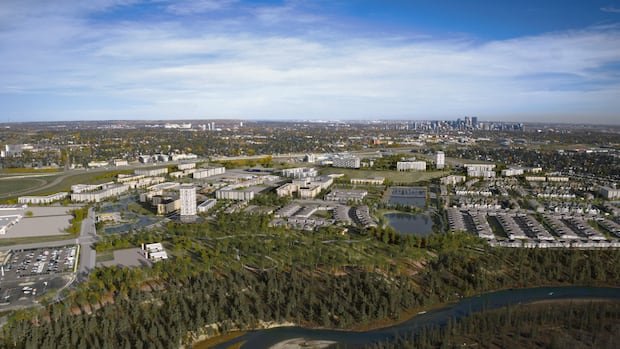
Indigenous communities nationwide are spearheading significant housing initiatives, making homeownership and quality rental housing more accessible to a broader audience while bolstering Indigenous economic advancement. One prominent development is Sen̓áḵw on Squamish Nation land in Vancouver, set to encompass over 6,000 rental units across 11 towers upon completion. In Alberta, the Taza project on Tsuut’ina Nation land near Calgary spans about 190 hectares, with plans for 6,500 homes in its initial phase. Furthermore, Naawi-Oodena by the Treaty One Nations in Winnipeg and the Millbrook First Nation in Nova Scotia are poised for additional housing development.
Michael Janes, an economist and University of Victoria PhD candidate specializing in First Nations economic progress, explains that homes constructed on Indigenous lands are commonly sold as leasehold properties, encompassing various housing types such as single-family houses, townhomes, condos, or apartments. Unlike freehold properties granting ownership of both the structure and land, leasehold buyers solely possess the home itself, with the land retained by the First Nation. Leasehold agreements, which may span 40, 50, or 99 years, necessitate lease renegotiation post-expiry, thus rendering them less appealing to buyers desiring complete ownership of both home and land. Nonetheless, this structure renders these homes notably more affordable.
Realtor Josh Wong notes the burgeoning popularity of leasehold developments, particularly those on Indigenous territories, enabling buyers to access desirable neighborhoods that would have otherwise been financially out of reach. Notable examples include kʷasən Village in Burnaby, a joint project by the Musqueam Indian Band and Tsleil-Waututh Nation, where homes are selling for less than $1,000 per square foot compared to nearby freehold residences priced at $1,200 to $1,300.
Chief Laura Cassidy of the Tsawwassen First Nation expresses pride in addressing Metro Vancouver’s housing scarcity through the Nation’s diverse developments, catering to a wide demographic from young families to retirees. Property taxes from leaseholders are reinvested into the community to support new infrastructure and services. With over 5,000 leaseholders currently residing on Tsawwassen First Nation land and room for 10,000 as the community expands, Cassidy underscores the communal benefits of these initiatives.
Bernadette Kudzin and her spouse, after their children moved out, opted to downsize and settled in Stahaken, a community established on Tsawwassen First Nation land. The 1990s home they purchased had approximately 70 years remaining on its 99-year lease, offering a more affordable alternative to comparable properties in Delta. Beyond affordability, the natural surroundings and community spirit captivated Kudzin, who actively engages in Tsawwassen First Nation’s communal events, fostering a sense of belonging and cultural enrichment.
The trend of Indigenous-led housing developments is expected to gain momentum, empowering first-time buyers and retirees to access homeownership at a fraction of the cost compared to traditional freehold properties. This inclusive approach not only addresses housing challenges but also fosters economic growth and community prosperity within Indigenous territories.