
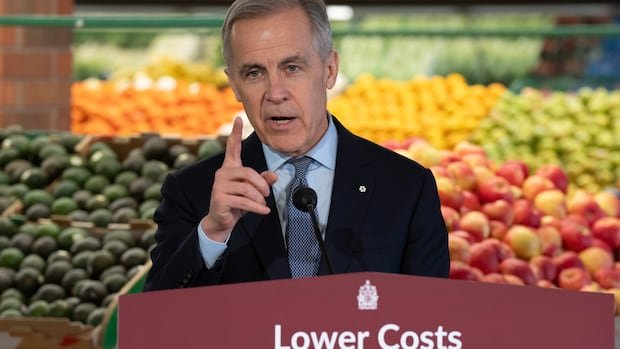

Prime Minister Mark Carney suggested that U.S. President Donald Trump’s recent tariff threat against Canada was strategically timed before the upcoming negotiations to renew North America’s main free-trade pact. Carney highlighted Trump’s negotiation tactics and emphasized the need to consider the broader context of the situation. Trump had threatened to impose 100 per cent tariffs on Canadian goods in response to a potential trade deal between Canada and China, expressing concerns about China’s influence on Canada.
The Canada-U.S.-Mexico-Agreement (CUSMA), negotiated during Trump’s first term, faced tensions and tariff threats during the talks but was eventually signed as a replacement for the North American Free Trade Agreement. As the mandatory review of the agreement approaches, uncertainties loom over its future, with Trump previously dismissing its relevance. Despite Trump’s critical social media posts, Canadian Trade Minister Dominic LeBlanc had a productive conversation with U.S. Trade Representative Jamieson Greer, expressing Canada’s readiness for detailed discussions and commitment to the CUSMA review process.
Greer has hinted at the possibility of splitting the three-way pact and negotiating separate deals with Canada and Mexico, raising concerns about the agreement’s stability. Carney anticipates a rigorous review process for CUSMA, given Trump’s past comments signaling potential challenges for Canada. The prime minister’s recent remarks at the World Economic Forum stressed the changing global order and the need for unity among middle powers against economic pressures from larger nations.
Carney’s speech at the forum, which garnered praise from European leaders, underscored Canada’s early recognition of global shifts compared to other countries. Trump’s evolving stance on Canada’s trade agreements, particularly with China, has created uncertainties for CUSMA’s future. The agreement has played a crucial role in shielding Canada and Mexico from the impact of Trump’s tariffs, providing some stability amid ongoing trade disputes affecting various Canadian industries like steel, aluminum, automobiles, lumber, and cabinets.