

The U.S. has delivered a truce proposal to the factions in conflict in Sudan, but neither group has officially accepted it, according to U.S. envoy Massad Boulos, who spoke on Tuesday. This comes as the Sudanese army accused its opponents of launching an attack even after announcing a ceasefire.
Boulos noted that while there were no objections to the proposal’s content, the Sudanese army responded with “preconditions” that he deemed unattainable.
The paramilitary group Rapid Support Forces (RSF), which is the army’s adversary in this conflict, unilaterally announced a halt to hostilities on Monday in accordance with U.S. requests. However, the army claimed on Tuesday that it had thwarted an attack on a base located in Babanusa, in West Kordofan state, which has become the latest frontline in the ongoing war.
Last week, U.S. President Donald Trump expressed his intention to intervene in the conflict that erupted in April 2023, stemming from a power struggle that has led to famine, ethnic violence, and mass displacement.
Prior attempts by the U.S., alongside Saudi Arabia, Egypt, and the United Arab Emirates, have not yielded positive results. This coalition had submitted a proposal to both factions in September.
“We have put forth a robust text for a ceasefire, yet neither the Sudanese Armed Forces (SAF) nor the RSF have formally accepted our proposal,” Boulos, who serves as Trump’s advisor for African and Arab affairs, stated on Tuesday, suggesting that the current plan is an extension of the September proposal.
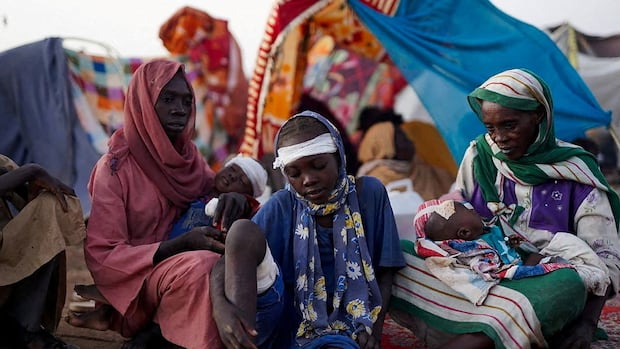
Nearly three weeks after the paramilitary Rapid Support Forces captured El Fasher a news blackout remains in place. The UN estimates 90,000 people have fled and many more are believed still trapped as aid groups struggle to get access and the United Nations appeals for funds fall short of targets they say they need for humanitarian relief.
On Sunday, Abdel Fattah al-Burhan, the chief of the Sudanese army, criticized the latest U.S. proposal, labeling it as the worst he had encountered, claiming it marginalized the army and legitimized the RSF.
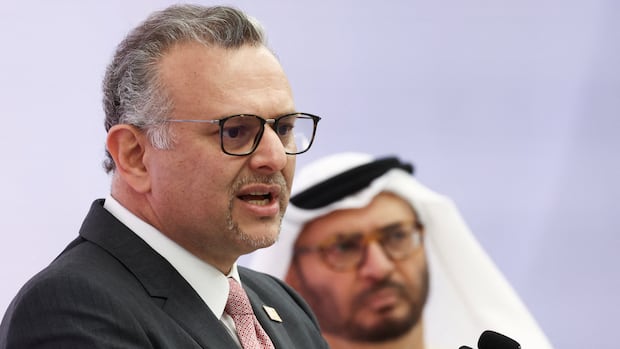
Boulos addressed these criticisms at a news conference with Anwar Gargash, the diplomatic advisor to the U.A.E. president, asserting that Burhan’s objections were based on misinformation.
The Sudanese army has previously opposed the U.A.E.’s involvement in peace negotiations and has stated it would only agree to a truce once the RSF withdraws its forces from civilian areas.
-
UN agency warns aid operations in Sudan on the ‘brink of collapse’
-
Sudan’s paramilitary force agrees to U.S. proposal for humanitarian ceasefire
The U.A.E. has faced widespread accusations of supplying arms to the RSF, a claim it has denied. Gargash stated on Tuesday that “disingenuous claims and misinformation campaigns” will not deter the U.A.E. from pursuing peace.
Additionally, Gargash indicated that the future of Sudan should not be determined by the Muslim Brotherhood or related entities, referring to the Islamist influence within the Sudanese army, which Burhan has refuted.
Boulos suggested that if the U.S. proceeds with designating the Muslim Brotherhood as a terrorist organization, affiliates in the region could be scrutinized.
On Monday, facing international pressure following violent assaults on civilians by his forces late last month, RSF leader Mohamed Hamdan Dagalo announced an immediate unilateral ceasefire. It was uncertain on Tuesday whether this ceasefire was being maintained.
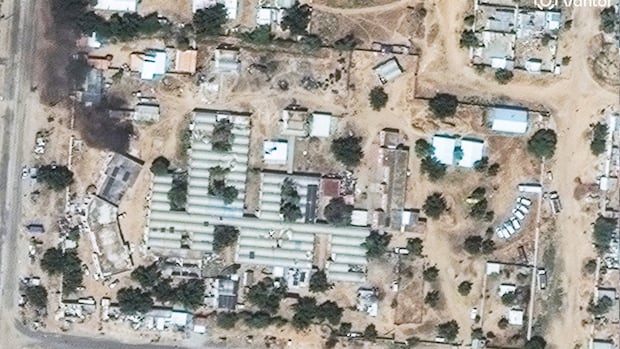
The war in Sudan has been raging for two and a half years, but in the last two weeks, a turning point has been reached. CBC News speaks to Nicholas Coghlan, a former Canadian diplomat in Sudan, for more on this story.
Boulos expressed his approval of the RSF’s declaration, hoping it would be adhered to.
“All external financial and military support to the fighting factions must cease,” he emphasized, without naming specific nations.
Khalid Aleisir, a spokesperson for the army-led Sudanese government, described the RSF’s declaration on Monday as a “clear political tactic” intended to divert attention from its fighters’ crimes.
The RSF has claimed that reports of atrocities have been overstated and that anyone found guilty of such acts would face accountability.