
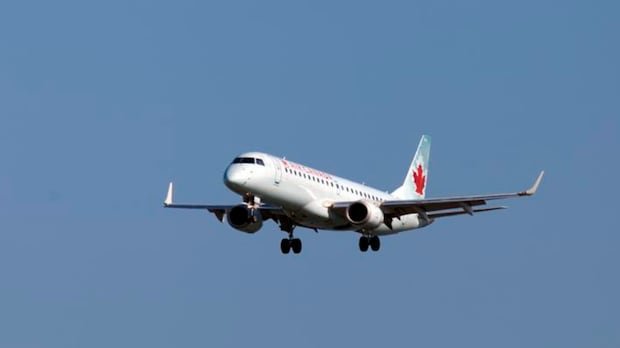

Passenger Experiences Severe Clear-Air Turbulence During Flight
Luke Wheeldon and Linda Woodhouse found themselves on Air Canada Flight AC33, each with their own plans for the journey. Wheeldon, exhausted after a music festival performance in P.E.I., was eager to rest on the flight back to Australia. Meanwhile, Woodhouse, en route to Perth for a new professorship, was calmly seated, ready for the long journey ahead.
Mid-flight, as breakfast aromas filled the cabin and passengers started waking up, a sudden jolt caught everyone off guard. Woodhouse, sensing unusual turbulence, quickly checked her seatbelt, while Wheeldon described the unexpected chaos that ensued. Bodies were thrown around the cabin, with some passengers sustaining injuries, including Wheeldon’s bandmate who suffered severe harm.
This turbulence, lasting only seconds but causing significant injuries to 37 individuals, was identified as severe clear-air turbulence. Researchers attribute the increased frequency of such incidents to climate change, specifically the warming of the upper atmosphere. The collision of warm and cool air masses in the jet stream leads to the development of clear-air turbulence, making it harder to predict and potentially more dangerous.
Despite challenges in forecasting and detecting clear-air turbulence, scientists are making progress in improving predictions. Paul Williams, a meteorology expert, notes advancements in forecasting accuracy, but warns of a potential doubling of severe clear-air turbulence if emission reduction measures are not implemented.
To mitigate the impact of turbulence on flights, researchers are exploring nature-inspired solutions. Aimy Wissa and her team at Princeton University are studying bird flight patterns to enhance aircraft stability during adverse conditions like turbulence. By mimicking certain aspects of bird feathers on airplane wings, they aim to improve flight performance and safety.
For passengers like Woodhouse and Wheeldon, the traumatic experience serves as a reminder of the importance of seatbelt usage during flights. Data supports the effectiveness of seatbelts in preventing injuries during turbulence, emphasizing the necessity of following safety protocols while onboard.
As incidents of turbulence continue to rise, efforts to enhance prediction methods and aircraft stability are crucial in ensuring passenger safety amidst the changing climate conditions.