
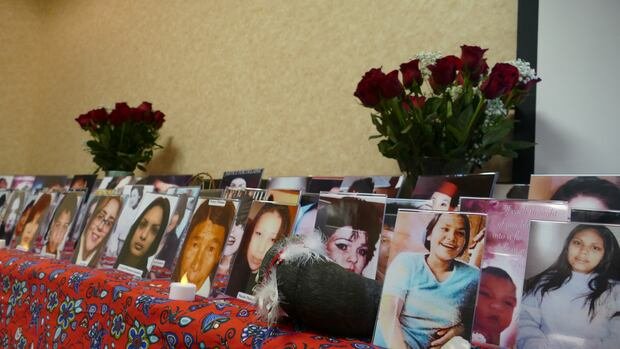

A fresh online platform and database showcasing the narratives of over 400 Indigenous women, girls, two-spirit, and gender-diverse individuals who vanished or were discovered deceased in Manitoba were unveiled in Winnipeg on Saturday — coinciding with the National Day of Action and Remembrance for MMIWG2S.
Dubbed Red Dress Stories MB, the initiative spearheaded by Giganawenimaanaanig, a local group focused on policy reform and advocacy for MMIWG2S+ in Manitoba, aims to pay homage to the lives of those who are missing or have been murdered, extend support to affected families and communities, and enhance public awareness, according to the website.
At the core of Red Dress Stories MB is an interactive map covering the entire province, featuring red numbered circles and dress icons pinpointing locations where a loved one went missing or was found deceased. Alaya McIvor, an advocate and relative of an MMIWG2S+ individual, painstakingly gathered information for each map point by engaging with families, documenting details like names, ages, hometowns, and last known whereabouts.
McIvor stressed the significance of empowering families through data research, a task she has been dedicated to for more than two decades. She emphasized the importance of amplifying family voices to help them reclaim their power and standing in society.
Jose Timog, a data analyst and web developer for Giganawenimaanaanig, expressed hopes that the website will serve as a catalyst for positive change by shedding light on the extent of the MMIWG2S+ crisis, encouraging policy reforms, and fostering education. He highlighted the website’s data indicating a notable rise in missing and murdered Indigenous women, girls, two-spirit, and gender-diverse individuals over the past five years.
The database reveals that 61 individuals were reported missing or found deceased between 2020 and October 5, 2025, whereas 62 MMIWG2S+ cases were documented from 2010 to 2019. Timog underscored the urgency of educating the public about the escalating rates at which Indigenous women are disappearing or being harmed.
Timog affirmed his commitment to continually update the website, incorporating new stories and shining a light on historical cases from past decades. The platform is set to feature support resources for families and survivors, alongside links to educational materials such as the National Inquiry into Missing and Murdered Indigenous Women and Girls’ final report and its 231 Calls for Justice.
Accessible in English, French, Ojibwe, and Cree, the Red Dress Stories website has garnered support from several entities, including the Ma Mawi Wi Chi Itata Centre, Ka Ni Kanichihk Inc., Wahbung Abinoonjiiag, the Southern Chiefs’ Organization, Manitoba Keewatinowi Okimakanak, 2Spirit Consultants, Red River College Polytechnic, and the provincial and Winnipeg governments.
McIvor expressed aspirations for the Red Dress Stories website to spark family-driven transformations across Manitoba and beyond, urging other jurisdictions to follow suit in gathering data on missing and murdered Indigenous women, girls, two-spirit, and gender-diverse individuals. Anderson-Pyrz, president of the National Family and Survivors Circle Inc., viewed the website as a means to establish a lasting legacy for future generations, emphasizing the value of Indigenous stories and lives.