
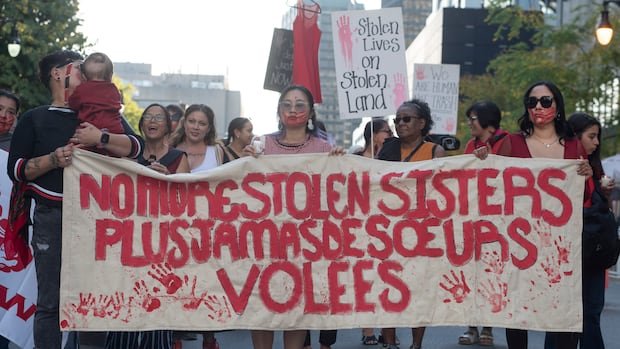

Shirley Pien, a health navigator at an Indigenous-led health clinic in Montreal, dedicates time each week to visit Cabot Square, a park frequented by many homeless individuals. She expressed concern over the disappearance of several Indigenous women who used to gather at the park.
Pien participated in a march in Montreal to raise awareness about the disproportionate number of missing and murdered Indigenous women and girls in Canada. She criticized the Montreal police for their inadequate response to these disappearances.
The march was part of a series of events held across Canada to mark the national day of action on October 4. Organizers highlighted the government’s failure to act on the recommendations of a 2019 national inquiry that declared the situation a crisis.
Simone Page, leading a team advocating for families searching for missing loved ones, emphasized the prevalence of sex trafficking among unhoused Inuit and other Indigenous women in Montreal. She pointed out that traffickers often target vulnerable women around Cabot Square and other locations.
Page criticized the delayed police response to missing persons reports, particularly in cases involving trafficking, stressing the critical importance of immediate action. She lamented the slow progress in implementing the 231 calls to justice from the national inquiry.
Native Nam, an author and artist from Quebec, expressed skepticism about the official numbers of missing and murdered Indigenous women, suggesting that the actual figures could be higher. She emphasized the human aspect behind the statistics, urging the audience to recognize the victims as daughters, mothers, and relatives.
In response to the ongoing crisis, the Quebec government outlined measures such as awareness campaigns on domestic violence and Bill 32 to enhance cultural safety for Indigenous patients. The government’s efforts have drawn mixed reactions from Indigenous communities.
Meanwhile, the federal ministry reiterated its commitment to addressing the national crisis, highlighting funding initiatives for shelters and community safety projects. Collaborative efforts involving Indigenous groups and government agencies aim to combat gender-based violence and human trafficking.