
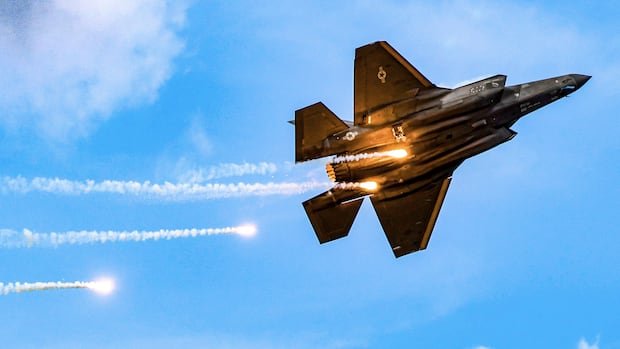

Canada is pushing forward with the F-35 fighter program at full speed unless directed otherwise, as confirmed by a senior official from the Department of National Defence in front of a House of Commons committee. Deputy Defence Minister Stefani Beck appeared before the tri-party public accounts committee to discuss the latest auditor general’s report on the increased expenses associated with acquiring the stealth jet.
After taking office, Prime Minister Mark Carney initiated a review of the $27.7 billion acquisition from U.S. defense contractor Lockheed Martin. The decision on whether to proceed with purchasing all 88 fighters or opt for a limited acquisition and explore alternative options was expected by late summer, but no decision has been communicated yet.
Beck informed the committee that the current directive is to adhere to the existing contract and arrangements until instructed otherwise. Efforts are concentrated on ensuring the necessary infrastructure, pilot training, and preparations for the arrival of the F-35s are in place.
Canada has committed to procuring a minimum of 16 F-35s, with four already funded and eight with partial payments made for the components. Initial deliveries are anticipated next year at a U.S. air force base for pilot and technician training.
The decision-making authority rests with the government, according to Beck. The Conservative members of the committee expressed their support for the F-35 program and eagerness to progress with it. Lt.-Gen. Jamie Speiser-Blanchet, the new commander of the Royal Canadian Air Force, acknowledged the challenge of managing two fighter fleets during the F-35 introduction due to the ongoing use of CF-18s until the early 2030s, which could result in increased costs and operational complexities.
Speiser-Blanchet emphasized the importance of transitioning to fifth-generation fighters promptly, citing the advanced capabilities of Canada’s adversaries like China and Russia. The cost escalation of the program to $27.7 billion in 2025, up from $19 billion in 2019, was attributed to changes mandated by the United States, delayed construction of facilities, and currency exchange fluctuations impacting program costs.
The final decision on the F-35 program’s future remains pending, with concerns raised by U.S. Ambassador Pete Hoekstra regarding maintaining a mixed fighter fleet. Retired Canadian air force major-general Duff Sullivan argued that aircraft types are less critical for inter-operability than shared tactics and procedures, referencing the varied aircraft types flown by the U.S. military for continental defense.