
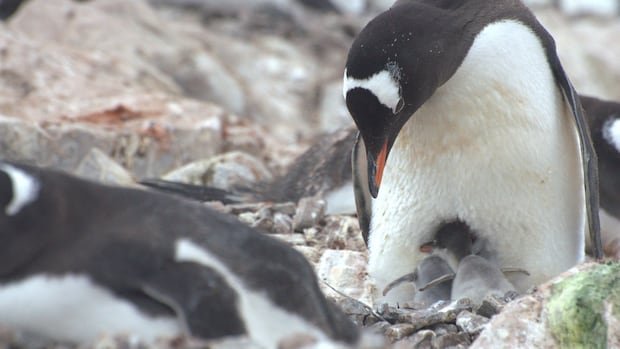

Penguins in Antarctica are rapidly adjusting their breeding patterns in response to increasing temperatures caused by climate change, according to a recent ten-year study. The study, which concentrated on three penguin species, indicates that different species are adapting at varying rates based on their characteristics and vulnerabilities.
Lead biologist Ignacio Martinez from the University of Oxford, who spearheaded the research, highlighted the possibility of climate change winners and losers among penguin species. The study focused on Gentoo, Adélie, and chinstrap penguins. Gentoo penguins, known for their ability to consume fish in addition to krill and their year-round proximity to nesting sites, appear to be leading the adaptation race. Their breeding season has shifted significantly earlier by an average of 13 days, marking the fastest change observed in any vertebrate species over a decade.
On the other hand, chinstrap and Adélie penguins, which rely heavily on krill for sustenance and undertake extensive migrations annually, experienced an average 10-day alteration in their breeding schedules. The researchers utilized a network of 77 time-lapse cameras to monitor these penguin species across Antarctica, observing 37 colonies dispersed throughout the region.
Despite the remarkable pace at which penguins are adapting to climate changes, the varying adaptation rates among different species could lead to conflicts over territory and food resources in the future. Martinez expressed concerns that while Gentoo penguins may thrive and establish new colonies while the other species decline, the overall outlook for penguins is bleak. He emphasized the importance of preserving multiple species to enhance survival chances amid environmental changes.
Beyond penguins, a recent study published in Nature Communications revealed that various bird, mammal, and reptile species worldwide are also adjusting their breeding and migration activities in response to climate change. The study indicated that these species are shifting their activities earlier, with faster changes observed in populations closer to the poles.
The study’s lead author, Viktoriia Radchuk, noted that these timing shifts may help species adapt to changing climate conditions while maintaining stable population levels. While the impact of changing breeding seasons on penguin populations remains uncertain, Martinez and his team plan to investigate this aspect further in their research.
Overall, these findings underscore the urgent need to understand and address the complex ecological impacts of climate change on Antarctic wildlife, including penguins and other species.