
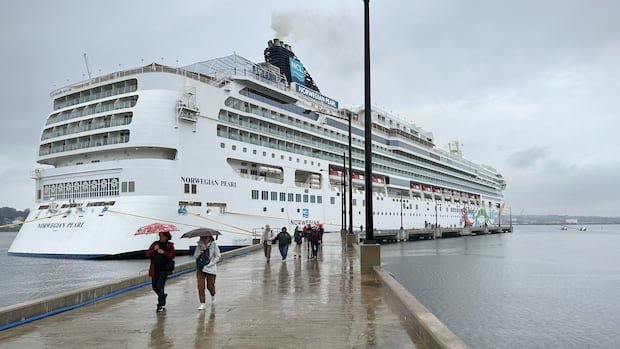

Cruise vessels frequent Halifax daily for much of the year, discharging a sizable population equivalent and an equal level of pollution into the city while berthed in the harbor. Brent Dancey, the director of marine climate action at Oceans North, noted the emission concerns, describing how a blue haze envelops the vicinity around the port.
Resident grievances regarding pollution from cruise ships have been voiced not only in Halifax but also in other Canadian cities like St. John’s. To address this issue, the option of connecting ships to the local power grid, known as shore power, has been proposed. This technology eliminates the need for ships to burn fuel for power while docked.
Ships typically burn heavy fuel oil and marine diesel oil, emitting hazardous pollutants such as fine particulate matter and greenhouse gases. In addition to propelling the ship, burning fuel generates the electricity required to sustain thousands of passengers or refrigerate large quantities of perishable goods on board.
Shore power offers a solution to the ongoing pollution caused by ships in port areas by providing access to on-shore electricity and the necessary infrastructure for ships to connect to it. However, vessels must be equipped with the appropriate connections to utilize shore power effectively.
Ports stand to benefit significantly from ships plugging into shore power, primarily through reduced harmful emissions. This move not only addresses pollution concerns but also contributes to the global effort to reduce greenhouse gas emissions from the shipping industry, which accounts for a significant portion of global emissions.
Despite the availability of shore power at some Canadian ports like Vancouver, Prince Rupert, Montreal, and Halifax, there is still limited coverage in terms of the number of berths and terminals supporting shore power. While progress has been made, certain ports like Halifax can only accommodate one ship at a time despite receiving multiple ships daily during the cruise season.
The adoption of shore power is essential for the sustainable development of ports and aligns with global initiatives to decarbonize the maritime sector. Regulations in regions like the EU mandate ships to connect to shore power at major ports, emphasizing the growing importance of this technology in reducing environmental impact.
While Canada has made strides in implementing shore power, challenges remain in ensuring widespread adoption. Incentives such as discounts on harbor fees could encourage more ships to plug in, ultimately leading to a cleaner and more environmentally friendly maritime industry.