
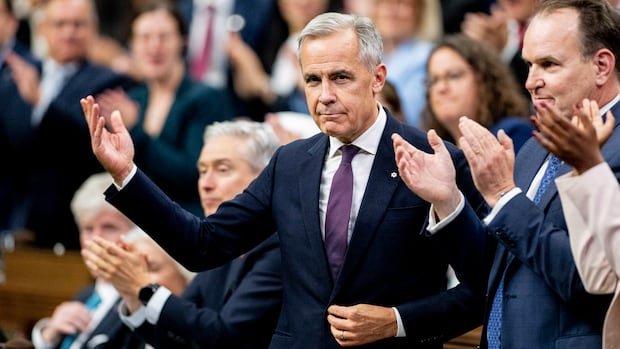

Prime Minister Mark Carney announced that discussions are ongoing between Canadian and American officials regarding a potential agreement on tariffs following his meeting with the U.S. president to resolve the trade war. Carney assured that Canada is positioned favorably and will secure an improved deal with the U.S., emphasizing the current tariff-free access of most Canadian products to the American market. He highlighted ongoing negotiations to enhance gains in key sectors, stating that tangible progress is being pursued rather than mere rhetoric.
The focus of the negotiations initially revolves around steel, aluminum, and energy sectors, with efforts also underway to address auto and forestry tariffs. Carney emphasized the importance of securing the best possible deal for Canada, particularly regarding softwood lumber. Despite not finalizing a deal during his visit, Trade Minister Dominic LeBlanc remained in Washington to work on the finer details of a potential agreement.
Carney highlighted the detailed discussions held with President Trump and expressed optimism about making specific progress to alleviate the impact of sectoral tariffs on Canadian industries. He underscored the shift towards bilateral deals alongside the Canada-U.S.-Mexico Agreement. Carney acknowledged a changing dynamic in the Canada-U.S. relationship, indicating a departure from the past trend of deepening integration.
Addressing concerns raised by the Opposition, Carney defended his approach to negotiations with the U.S. and emphasized the importance of private sector investment decisions. He highlighted the positive response from Canadians towards supporting local initiatives amid the trade war. Despite criticism from Conservative Leader Pierre Poilievre, Carney’s discussions with Trump also included potential investments in the U.S., such as the revival of the Keystone XL pipeline, which garnered support from Alberta Premier Danielle Smith.
Carney’s proactive engagement with the U.S. was praised by Smith as an effective communication strategy with President Trump. The potential revival of the Keystone XL pipeline was identified as a mutually beneficial initiative that could address Trump’s objectives and benefit Canadian interests. The importance of fostering a positive personal relationship with the U.S. president was underscored as a strategy to navigate trade challenges effectively.
Ontario Premier Doug Ford expressed a need for a firm stance in negotiations with the U.S., emphasizing the importance of reciprocity in tariff policies. The sentiment of standing firm against increasing tariffs was echoed, highlighting the necessity of safeguarding Canadian interests in trade negotiations.