
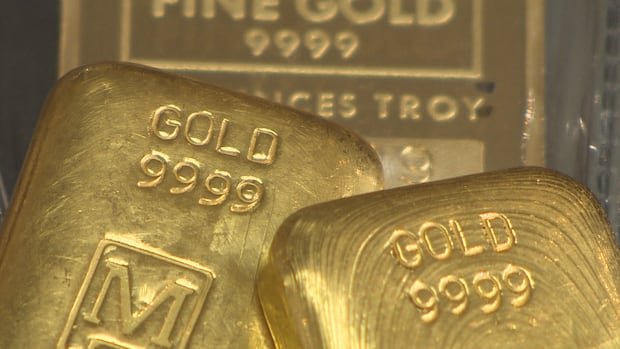

Gold surged past the $5,000 mark per ounce for the first time on Monday, with silver also climbing to $110 per ounce amidst various geopolitical tensions impacting the U.S. dollar. Investors have been turning to precious metals for their perceived safety and stability, driving their prices up significantly in recent months.
“As long as uncertainties surrounding fiscal dominance, geopolitical tensions, and central bank credibility persist, precious metals are expected to remain at the forefront of investment strategies, serving not only as hedges but also as viable alternatives,” noted Daniela Hathorn, a senior market analyst at Capital.com.
The U.S. dollar weakened to its lowest level since mid-November following a 1.5% rise in the Japanese yen in European markets. Despite recent gains against the yen, the dollar plummeted in response to indications from both Japanese and U.S. officials suggesting potential interventions to bolster the yen.
While Japanese financial authorities did not confirm intervention plans, they acknowledged close coordination with the U.S. regarding currency fluctuations. This intervention talk sparked a sharp rebound in the yen, fueled by expectations of collaborative efforts between Japan and the U.S., as outlined by Ipek Ozkardeskaya, a senior analyst at Swissquote.
The yen has faced sustained pressure since Sanae Takaichi assumed office as Japan’s prime minister in October. Takaichi’s pledges to increase spending and reduce taxes ahead of an upcoming election on Feb. 8 have raised concerns about Japan’s already strained finances. This has driven government bond yields to record highs, coinciding with the Bank of Japan’s gradual interest rate hikes to combat inflation, resulting in a 1.75% drop in Japan’s Nikkei index as the yen strengthened.
In the wake of the U.S. dollar’s decline against major currencies and increased market volatility, gold reached a new pinnacle, continuing its remarkable rally over the past six months. Gold prices surged by 2.1% to $5,089 per ounce, marking a January gain of over 17%, while silver also saw a nearly 7% increase to $110 per ounce, up by over 50% for the month.
“Gold’s narrative, particularly with regard to central bank reserve diversification, is gaining traction amidst intervention discussions and broader events in the U.S.,” stated Chris Scicluna, an economist at Daiwa Capital Markets. The potential U.S. involvement in the Japanese currency market carries significant implications, impacting not only the yen but also other Asian currencies, alongside a broader shift toward portfolio diversification away from the U.S.
Amidst these developments, global stock markets saw mixed performances on Monday, with some declines observed. As earnings reports from global companies loom on the horizon, market participants are monitoring the potential negative impacts of recent U.S. trade policies. U.S. President Donald Trump’s recent threats of imposing tariffs on Canadian goods have added a layer of uncertainty to international trade relations, further influencing market sentiment.
In energy markets, benchmark U.S. crude oil prices rose to $61.50 per barrel, while Brent crude, the international standard, edged up to $65.55 per barrel.