
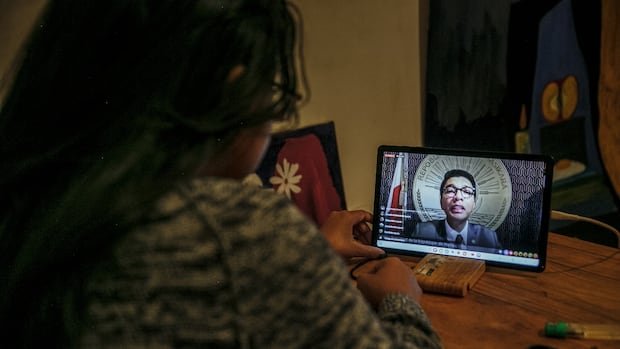

Madagascar’s President Andry Rajoelina disclosed that he left the nation due to concerns for his safety amidst a military uprising. In a televised address on Monday night from an undisclosed location, he stated that he had not resigned. The unrest escalated after an elite military unit joined anti-government demonstrations, demanding the president and government officials step down, leading Rajoelina to describe the situation as an illegal power grab and leave Madagascar.
Rajoelina emphasized the need for dialogue to resolve the crisis and stressed the importance of upholding the constitution. Although he did not disclose his departure method or location, reports suggested he was flown out of the country on a French military aircraft. The French Foreign Ministry declined to comment on this claim.
The protests initially sparked by water and electricity shortages have evolved into broader discontent with Rajoelina’s administration. This marks the most significant turmoil in the country since Rajoelina’s rise to power in 2009 following a military-backed coup. Notably, the same CAPSAT military unit that rebelled against Rajoelina previously played a pivotal role in his ascent to power.
While Rajoelina has not explicitly named the instigators of the attempted coup, the CAPSAT unit declared control over Madagascar’s armed forces and appointed a new military leader. This move was acknowledged by the defense minister in Rajoelina’s absence. The unit, backed by other military factions including the gendarmerie, is asserting authority and advocating for potential new elections if Rajoelina steps down.
The situation remains tense, with the U.S. Embassy advising citizens to stay indoors due to the volatile conditions. Meanwhile, the African Union has urged both civilian and military factions to exercise restraint. The protests have been marred by violence, resulting in casualties and injuries, prompting international criticism and calls for calm.
Madagascar has a history of political instability, with several leaders ousted in coups since gaining independence in 1960. Rajoelina, who ascended to power in the aftermath of a coup, has faced ongoing challenges, including allegations of corruption and mismanagement. The current unrest reflects deep-seated grievances over governance, economic hardships, and calls for democratic reforms.