
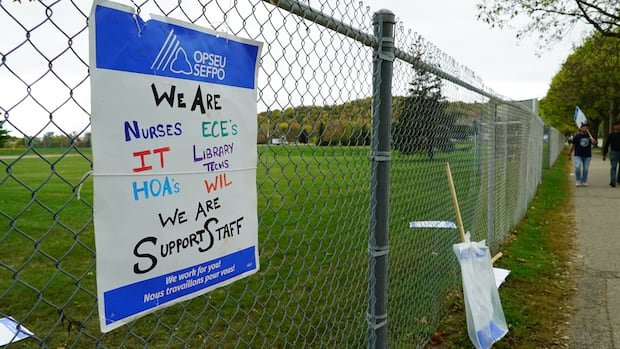

Part-time support workers at the 24 colleges in Ontario are gearing up for a strike vote next week, potentially joining their full-time counterparts who are in the midst of their fourth week of picketing. Represented by the Ontario Public Service Employees Union (OPSEU), approximately 10,000 part-time workers have been operating without a current collective agreement for nearly two years.
The bargaining team informed the College Employer Council (CEC) on September 1 of their plans to seek a strike vote in order to compel the colleges to engage in negotiations in a fair and meaningful manner. The vote for part-time support workers is scheduled to take place between October 14 and 17.
Dave Strutton, a part-time steward at Conestoga College, is focused on ensuring that the college’s 500 part-time support staff are adequately represented in union matters. He emphasized that demands for sick days and standardized job descriptions for part-time staff are top priorities for the bargaining team in discussions with CEC.
Strutton pointed out that the absence of standardized job descriptions can lead to managers assigning additional tasks to part-time workers, potentially pushing them beyond their designated hours and workload. This situation could result in part-time employees exceeding the agreed-upon 35 hours per week limit.
The steward highlighted that some members within the college have reported being asked by managers to assume responsibilities typically carried out by full-time employees during the strike. Additionally, there have been instances of attempts to alter employees’ hours and shifts, which violates the terms of their collective agreement.
According to Simon Black, an associate professor of labor studies at Brock University, the possible inclusion of part-time support staff in the strike alongside full-time workers signifies a substantial escalation in the labor dispute. Black noted that this move not only pits OPSEU against the colleges but also against the provincial government, which has reportedly underfunded post-secondary education, including colleges, for an extended period.
The involvement of part-time workers in the strike action is seen as beneficial for the striking full-time employees, as it intensifies pressure on both CEC and the provincial government to address the union’s demands effectively.