
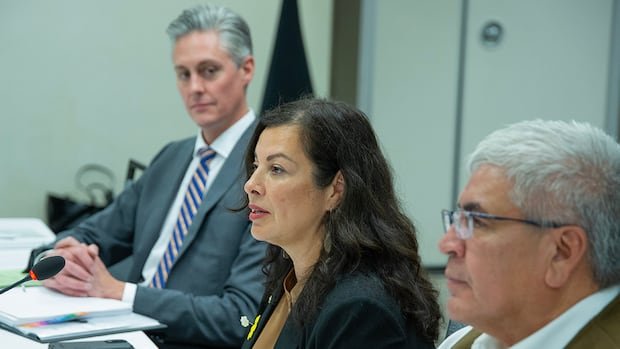

N.W.T. Premier R.J. Simpson expressed optimism following discussions with the federal government regarding the construction of the Mackenzie Valley Highway. He anticipates that ground will be broken on the project within the next two to three years. Simpson, accompanied by the N.W.T. Council of Leaders, met with various cabinet ministers and parliamentary secretaries in Ottawa this week.
In addition to the Mackenzie Valley Highway, other significant projects such as the Taltson hydro expansion and the Arctic Economic and Security Corridor are receiving positive reception in Ottawa. The proposed Mackenzie Valley Highway would link Wrigley to Norman Wells, facilitating access to remote communities along the route. Initial estimates peg the project’s cost at $1.65 billion, subject to potential adjustments according to a Ministry of Infrastructure spokesperson.
Seeking financial support from Ottawa, Simpson outlined a potential funding split where the territory would contribute 25% while the federal government covers the remaining 75%. Although financing details remain unsettled, Simpson mentioned the possibility of tapping into federal programs for initiating construction.
Last year, the N.W.T. government anticipated receiving an environmental assessment report on the Mackenzie Valley Highway project in 2025 or early 2026. Despite not being as prioritized by the federal government compared to the Arctic Economic and Security Corridor, Simpson mentioned positive discussions with the prime minister on the highway project.
The N.W.T. Council of Leaders, comprising representatives from the territorial and Indigenous governments, visited Ottawa to address various issues beyond major projects. While no firm commitments emerged from this year’s trip, Simpson noted a heightened focus on the North from Ottawa this time.
Traveling as a unified delegation has enhanced engagement with the federal government, as highlighted by Chief Danny Gaudet of the Délı̨nę Got’ınę Government. The delegation’s collective approach has garnered increased attention and support from Ottawa, streamlining discussions and advocacy efforts.
Conversations during the visit encompassed topics such as the impact of cuts to Jordan’s Principle funding on education, housing funding, and Métis rights. The delegation engaged with a range of federal officials, including ministers and parliamentary secretaries, to address these pressing issues.
Meetings with federal representatives, including those from emergency management, public safety, Indigenous services, and health, took place during the visit. Prime Minister Mark Carney was unavailable during the delegation’s trip to Washington.
The trip, funded by the N.W.T. government and Crown-Indigenous Relations and Northern Affairs Canada, concluded with plans to disseminate discussed topics and proceed with submitting proposals to the government post-meetings. Chief Gaudet expressed satisfaction with the outcomes of the visit and emphasized the importance of ongoing advocacy and collaboration.