
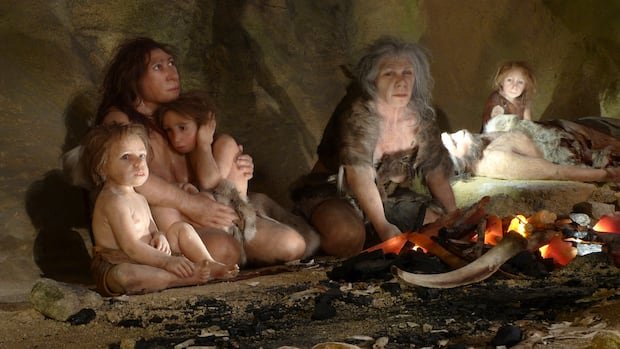

A recent genetic study suggests that Neanderthals primarily inherited modern human DNA from the females in their family due to mating preferences. Researchers from the University of Pennsylvania analyzed Neanderthal X chromosomes to uncover insights into ancient populations’ social behavior.
Interaction between Neanderthals, who lived in Europe and Asia, and modern humans from Africa led to interbreeding, resulting in the presence of Neanderthal DNA in non-African human ancestors. The study focused on the distribution of human DNA in Neanderthal X chromosomes, revealing a higher concentration compared to other chromosomes.
Examining ancient Neanderthal and modern human women’s X chromosomes, researchers found that Neanderthal females carried significantly more human DNA in this specific chromosome. This phenomenon suggested potential preferences in mating between individuals with different ancestries, with women passing on more X chromosomes than men.
The unequal distribution of human DNA in Neanderthal X chromosomes may be attributed to preferences in mate selection, migration patterns, and genetic factors. The study proposed that Neanderthal ancestry in males or females might have influenced attractiveness, leading to the observed genetic patterns.
Further research by experts like Damian Labuda supports the study’s findings, indicating possible implications on breeding patterns and genetic compatibility between Neanderthals and modern humans. These discoveries shed light on the complex interactions that shaped ancient populations and their evolutionary pathways.