

Jennifer Cooper stumbled upon her initial vertical drama while browsing TikTok. The advertisement showcased a melodramatic series centered around a woman seeking vengeance on her unfaithful boyfriend and hostile family by seducing the boyfriend’s affluent uncle. The themes of jealousy and romance resonated with Cooper, reminiscent of the Chinese dramas she had been following. Intrigued, she watched all the brief episodes before investing in the full story.
The narrative concluded with the woman finding love and triumphing over her adversarial family. This experience led Cooper to delve into reviewing and creating content about similar billionaire romances, authoritative figures, and vengeful characters on the platform.
Welcome to the realm of microdramas — extravagant tales presented in one- to two-minute snippets in a vertical format directly on your smartphone. Numerous apps are dedicated to this content, extensively promoted on social media platforms like TikTok. While each video is concise, the entire storyline unfolds across multiple videos, akin to a segmented movie.
Despite the foreseeable plots, these videos are garnering significant attention, even attracting interest from producers and talents in Canada venturing into this innovative medium.
In the North American entertainment industry, individuals like TV journalist Elaine Low draw parallels between this format and Quibi, a short video-focused streaming platform that closed down in 2020. Although Quibi did not succeed in North America, it gained popularity in China in recent years.
The microdrama industry in Asia reportedly amassed $7 billion in 2024, surpassing box office revenues in the region. Japan and South Korea are also embracing this trend, with the global microdrama industry projected to reach a value of $9.5 billion by 2030.
This flourishing industry has begun to make its mark in North America, with even traditional Hollywood studios acknowledging its potential. For instance, Fox has struck deals with microdrama creators, and companies like DramaBox have secured investments and partnerships, including support from Disney.
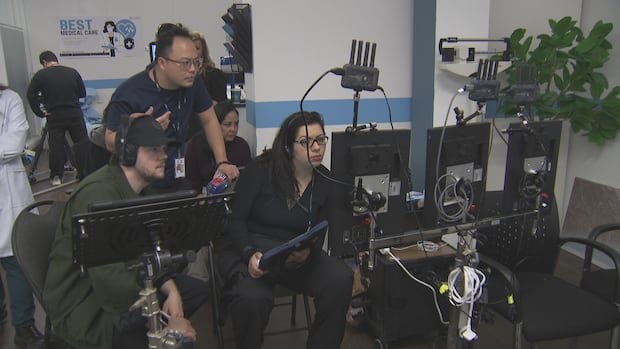
Director Samantha MacAdams, with a background in commercials and TV shows, has transitioned to microdramas due to their rising prominence in Hollywood. She notes the increasing viewership on mobile devices, particularly among the younger demographic.
In Canada, the microdrama trend has also gained traction. Actors like Evan Bacic have found steady work in vertical dramas, providing them with more acting opportunities than traditional gigs. The pace on a microdrama set is rapid compared to high-budget features, requiring actors to memorize lines quickly and adapt to the intense filming schedule.
However, the majority of microdrama productions are not unionized, raising concerns about worker compensation and safety on sets. Organizations like ACTRA Toronto are implementing initiatives to establish payment standards, guidelines for stunt coordinators, and the employment of underage actors in microdramas.
While fans like Cooper appreciate the entertainment value of microdramas, they also highlight issues like the lack of diversity in casting and stereotypical storylines. Industry professionals acknowledge the need for improvement in writing and acting quality in microdramas, emphasizing the importance of patience and skill development in this evolving medium.
Tim Zhou, CEO of Toronto-based Ottawood Film Studios, believes that vertical storytelling is the future of entertainment, stressing the significance of quality production and skilled practitioners for the industry’s growth and success.