
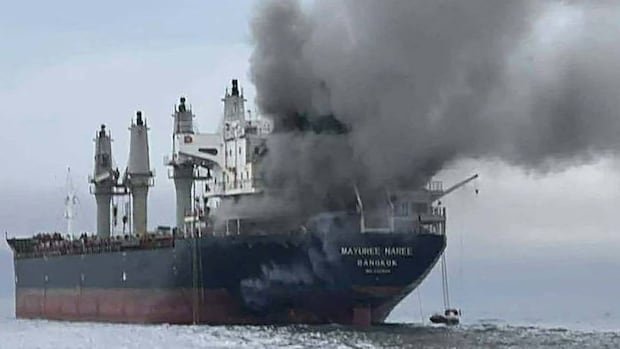

Energy and trade specialists are issuing warnings about the escalating impact on global supply chains as the conflict between the U.S. and Israel with Iran continues, and the Strait of Hormuz remains inaccessible. The focus is primarily on oil markets currently, with approximately 250 million barrels of oil being obstructed from leaving the Persian Gulf during the 12-day conflict, leading to increased fuel prices worldwide. However, it’s not just oil facing disruption.
Experts are predicting potential shortages in critical metals like copper, nickel, and cobalt sourced from the Gulf, according to Jim Krane, the Wallace S. Wilson Fellow for Energy Studies at Rice University in Houston, Texas. Additionally, nearly half of the global urea supply, a widely used fertilizer, originates from the region, making it a crucial component in the global economy.
Consequences of the conflict are already evident, with a major aluminum producer in Bahrain declaring force majeure and suspending deliveries. Moreover, Qatar, a significant exporter of liquefied natural gas, has halted production at its facilities due to the ongoing situation.
Even if the Strait of Hormuz were to reopen today, it would take months to resolve the disruptions caused. Jeff Currie, CEO of investment firm Carlyle Group, emphasized the extensive impact on global supply chains, affecting not only oil but also gas, fertilizer, metals, and petrochemicals, among others. The realignment of ships, cancellations of insurances, and other complications mean the repercussions will persist for an extended period.
The conflict has raised concerns in South Korea’s chip industry, with warnings that semiconductor production could be at risk if essential materials are unavailable from the Middle East. Helium, crucial for cooling equipment during production, is highlighted as a key material that could be impacted.
In the short term, the oil and gas shortage has led to cost increases, but experts believe these higher prices do not fully account for the potential consequences if the Strait of Hormuz remains closed for an extended period. Analysts describe the situation as creating a tightening global oil market, which could result in shortages in poorer countries.
Already, countries like Pakistan and Bangladesh are experiencing acute shortages, potentially leading to power outages. Efforts for a synchronized release of oil reserves globally may offer some relief, but the solution is limited. The uncertainty surrounding the conflict’s resolution poses ongoing risks to supply chains and the global economy.
The urgency for the resumption of normal traffic through the strait is emphasized by experts to prevent a breakdown in the oil market that could have severe economic repercussions. The lack of clarity on the conflict’s resolution path heightens the uncertainty, with each passing hour posing new risks to exacerbate the challenges faced by global supply chains.