
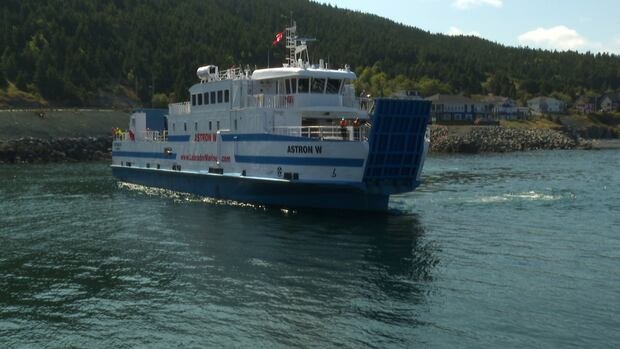

Days ahead of the upcoming provincial election in Newfoundland and Labrador, political parties have addressed the recent revelation by CBC that the province increased its expenditure significantly to maintain four ferries in 2025.
According to an access-to-information request, Newfoundland and Labrador allocated $18,141,570.50 for the maintenance of the MV Legionnaire, MV Flanders, MV Veteran, and MV Beaumont Hamel during the year. This amount covers approximately $5.3 million for repairs and other expenses, along with $12.7 million for chartering swing vessels.
Progressive Conservative leader Tony Wakeham, speaking while campaigning in Port au Choix, emphasized the pressing need for new vessels to replace the aged ferry fleet. Wakeham underscored the importance of not only replacing the ferries but also ensuring their construction takes place locally in Newfoundland and Labrador.
Despite the commitment to new ferries, the Progressive Conservative platform does not specify the estimated cost of the vessels. Instead, the platform indicates that the expense will be spread over the asset’s lifespan, referencing the $60 million cost of the province’s last two ferry acquisitions.
In contrast, NDP leader Jim Dinn criticized the Liberal government for the surge in ferry system spending, attributing it to a lack of transparency and accountability. Dinn highlighted the substantial increase in expenses as indicative of poor governance and mismanagement.
The Liberals defended their financial allocation for ferry maintenance, claiming responsible funding provision for the services. The party criticized the Progressive Conservatives’ proposal for new vessels, citing unrealistic promises without a clear funding plan. The Liberals acknowledged the challenges faced during the summer, with delays and frustrations among Bell Island residents and protests from Fogo Island residents over ferry service changes.
The Liberal party spokesperson affirmed their commitment to securing a swing vessel that balances service maintenance and cost-effectiveness, ensuring safe and reliable transportation for communities dependent on ferry services.
In conclusion, the political discourse surrounding ferry spending in Newfoundland and Labrador reflects contrasting viewpoints on accountability, transparency, and responsible financial management within the provincial government.