
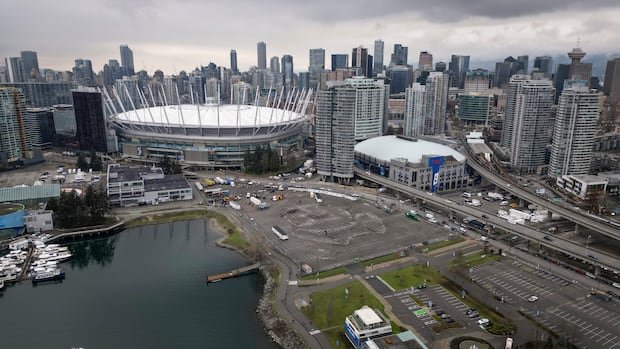

The 2026 FIFA World Cup is approaching in about eight months, and B.C. Place is already undergoing changes in preparation for the event. Upgrades such as new elevators and a temporary grass field are reshaping the stadium, sparking discussions about costs and location.
This tournament is a significant global sporting event, and next year, Canada will co-host the men’s World Cup for the first time with the United States and Mexico. Vancouver and Toronto are the designated host cities in Canada.
Chris May, the general manager of B.C. Place, highlighted that the enhancements aim to enhance accessibility and fan experience. These include additional washrooms, gender-neutral facilities, and improved entry points. Moreover, major hospitality spaces will be incorporated to create new business opportunities beyond the tournament.
The B.C. Pavilion Corporation estimates that the total costs related to upgrades and operations for the World Cup will range between $171 million and $181 million. However, the overall hosting expenses, jointly estimated by the city and province, could amount to $483 million to $581 million. The B.C. government foresees a net cost of $100 million to $145 million after factoring in anticipated revenue.
To comply with FIFA regulations, a natural grass pitch from the Fraser Valley will be installed temporarily for the World Cup. Post-event, the grass will be replaced with new turf for the Vancouver Whitecaps and B.C. Lions.
Economics professor Moshe Lander raised concerns about the temporary grass installation, calling it a “waste of money.” He also questioned the necessity of other upgrades for B.C. Place beyond the tournament’s duration.
Lander emphasized that apart from costs, the stadium’s age and downtown location pose significant challenges. He described B.C. Place as an aging facility situated in a bustling downtown area, leading to potential congestion issues during the tournament.
Unlike other host venues with ample parking, B.C. Place is surrounded by residential towers, businesses, and Rogers Arena. However, its proximity to public transportation options like SkyTrain stations, bus routes, and bike paths offers easy access for thousands of fans without the need for parking.
Local businesses, such as Pane e Formaggio bakery, are anticipating increased foot traffic during the World Cup while expressing concerns about potential restrictions impacting their operations. Despite apprehensions, business owners like Mehdi Oraei are excited about the anticipated surge in customers during the tournament.
Construction activities are also underway near B.C. Place, with a century-old warehouse on Beatty Street being transformed into a modern office building. Company president Jon Stovell expects the construction to be completed by February, just in time for the World Cup.
Canada is scheduled to play two group-stage matches at B.C. Place during the 2026 World Cup. FIFA estimates that the event could generate up to $3.8 billion in economic output across Canada.