

On a breezy autumn day, the gently undulating hills near Rome hosted an unexpected gathering. Various stakeholders, including wool producers, designers, activists, and even renowned personalities like Isabella Rossellini and her daughter, convened at Ilaria Venturini Fendi’s farm. The focus was not on celebrating high-end fashion but on reimagining it completely.
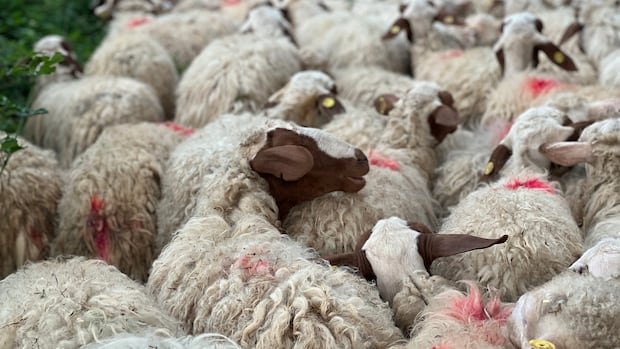
Fendi, who maintains 600 sheep at her working guest farm on the outskirts of Rome, highlighted the challenges of wool production in Italy. She emphasized the need for a shift in mindset to revamp economies as wool has become a byproduct due to the unfeasible processing costs compared to returns.
The inaugural in-person World Hope Forum, hosted by Fendi, aimed to showcase that wool production could be sustainable, ethical, and localized. The event brought together experts and advocates committed to demonstrating the viability of a circular wool production system.
Fendi, renowned for her expertise in luxury fashion as a scion of the Italian fashion dynasty, departed from the family business to establish Carmina Campus, a label promoting reuse and regeneration. The timing of the forum was significant, preceding the UN’s upcoming International Year of Rangelands and Pastoralists in 2026, emphasizing the importance of safeguarding traditional herding cultures and natural fibers.
Blátnaid Gallagher, the founder of Ireland’s Galway Wool Co-op, shared insights on revitalizing native Irish wool, which faced near extinction due to cheaper imports falsely labeled as Irish. Gallagher advocated for stricter fiber origin regulations in Europe to empower consumers and support local farmers.
Cynthia Hathaway, a Dutch-Canadian designer, echoed the sentiment of a potential resurgence in natural fibers like wool. She highlighted the ecological and cultural significance of wool through initiatives like the Wool March, which merges activism with showcasing the value of wool in urban settings.
Despite the current scenario where less than one percent of global textile fibers originate from wool, there is a growing momentum towards embracing sustainable fibers. Small-scale producers like Reina Ovinge from the Knit Wit Stable in the Netherlands have adopted a micro-supply chain approach to address the challenges posed by mass production in countries like China and Australia.
Isabella Rossellini and her daughter manage Mama Farm in New York, fostering biodiversity through heritage sheep and organic vegetable cultivation. Their Farm to Fashion program, which collaborates with young designers to create unique garments using the farm’s wool, exemplifies a community-driven approach to sustainable fashion.
While challenges persist, innovative approaches like Matteo Mantellassi’s recycled wool at Manteco offer a glimpse of a circular and sustainable future for the industry. By repurposing post-consumer garments without additional dyes or water, Mantellassi’s MWool and ReviWool showcase the potential for reducing emissions and conserving resources.
The World Hope Forum served as a platform to advocate for long-term investments and collaborations to drive sustainable practices in the wool industry. As the industry evolves, a collective effort is needed to educate designers, empower consumers, and create a more transparent and ethical wool value chain.