
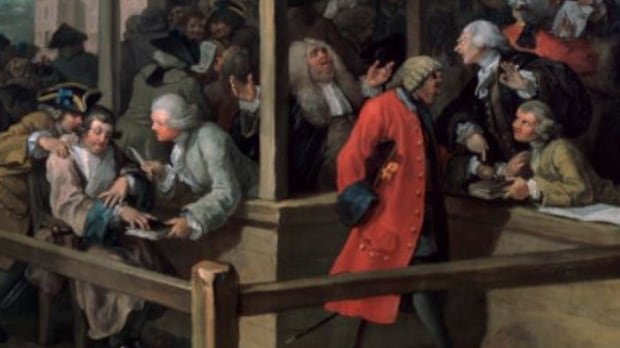

In the realm of democracy, New Brunswick’s inaugural electoral journey faced significant turbulence. Nearly 240 years ago, political candidates embarked on their campaign trail in the newly formed British colony. According to Greg Marquis, a history professor at the University of New Brunswick Saint John, the 1785 election can be best described as “contentious” and “rowdy.” Marquis emphasized that colonial-era elections were often rowdy, but New Brunswick’s first election stood out for its extreme nature even by 18th-century standards.
The establishment of modern-day New Brunswick was preceded by its affiliation with Nova Scotia until 1784. The aftermath of the American Revolution led to a surge of United Empire Loyalists relocating to the British North American colony, prompting the division of Nova Scotia into two separate entities. Thomas Carleton, serving as the new colony’s initial lieutenant-governor, gradually set the foundation for the region’s governance, in accordance with his directives.
The election was officially scheduled for October 15, with voting taking place on November 7 to elect members for the colony’s inaugural 26-seat legislative assembly in Saint John. Unlike contemporary elections, there were no designated electoral districts, and multiple representatives were chosen from each of the colony’s eight counties. Only white males aged 21 or above were eligible to vote, and the typical land ownership requirement for voters was waived, necessitating only a three-month residency in the region.
The voting process lacked the structured framework seen today, without the presence of a governing body like Elections New Brunswick or specific election laws. Polling stations were determined by the sheriff, and voters openly declared their chosen candidate without the secrecy of a ballot. The absence of political parties further contributed to the unique nature of the election process.
Carleton envisioned a democratic system in New Brunswick characterized by restraint and deference. However, internal divisions within Saint John between the Upper and Lower Covers communities disrupted his plans for a harmonious assembly composition. The election outcome favored the Lower Covers over the Upper Covers, leading to violent confrontations and disputes over representation.
The aftermath of the election saw accusations of voter eligibility discrepancies, particularly favoring the Upper Cove population. Despite the Lower Covers’ petition for justice, the assembly, influenced by the Upper Cove’s interests, dismissed their grievances. Moreover, religious discrimination disenfranchised many Acadians, further highlighting the flaws in the electoral process.
Ultimately, New Brunswick’s 1785 election marked a turbulent chapter in the region’s democratic evolution. Though marred by irregularities and injustices, the election underscored the gradual progression towards a more inclusive and fair democratic system. Furthermore, it challenged historical perceptions of the United Empire Loyalists, revealing their complexities and human nature amidst political turmoil.