
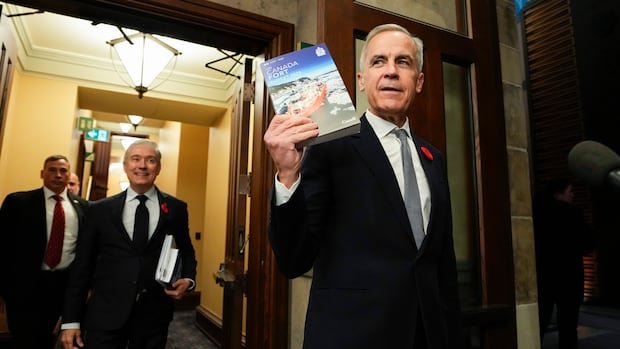

Finance Minister François-Philippe Champagne unveiled his inaugural federal budget on Tuesday, featuring significant measures to support a struggling economy facing substantial disruptions. The budget outlines a deficit of around $78 billion for the 2025-26 fiscal year, a figure lower than anticipated by some economists but still notably higher than previous projections due to the impact of the trade war initiated by former U.S. President Donald Trump.
The budget plan includes approximately $141 billion in new expenditures over the next five years, partially offset by $51.2 billion in cuts, totaling $60 billion in savings. The 406-page budget paints a somber economic picture, citing rising unemployment, heightened business uncertainty, and sluggish productivity.
To address these challenges, the government plans to make substantial investments in infrastructure, housing, the military, and tax reforms to stimulate business growth and enhance self-sufficiency. Prime Minister Mark Carney aims to boost Canada’s workforce and kickstart economic development.
Key highlights of the budget include increased spending of $141 billion over five years, a $78 billion deficit for the current fiscal year, reductions in the public service workforce by nearly 40,000 positions through buyouts and attrition, a $51 billion investment in infrastructure projects, and an $81 billion allocation for the Canadian Armed Forces. Additionally, the budget outlines cuts to immigration, proposed changes to emissions regulations, and various measures to streamline government operations and reduce expenditures.
The budget emphasizes a focus on capital investments in housing, infrastructure, and defense, with strategic projects like high-speed rail, port expansions, and carbon capture initiatives receiving priority. The government also introduces tax incentives to encourage business investments and plans to establish funds for critical minerals development and artificial intelligence initiatives.
While the budget projects continued deficits without a specific timeline for balancing the budget, it aims to prioritize capital spending to drive economic growth and job creation. The government intends to leverage these investments to attract private sector participation and strengthen Canada’s industrial capabilities.
The budget includes provisions to address environmental concerns, support youth employment through the Youth Climate Corps, and modernize public broadcasting with increased funding for CBC/Radio-Canada. However, the budget faces opposition from conservative parties, with critics raising concerns about escalating costs and the impact on essential services and affordability.
In summary, the budget outlines a comprehensive strategy to revitalize the economy, enhance national security, and drive innovation, positioning Canada for sustainable growth and resilience in the face of economic challenges.