
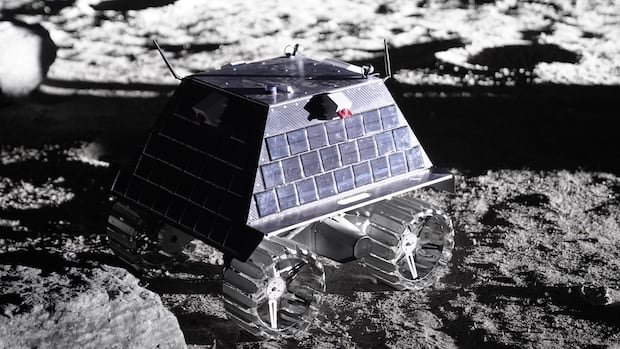

The Canadian Space Agency (CSA) has decided to cancel its lunar rover mission outlined in the 2026-2027 departmental plan. Initially announced in 2022, the mission aimed to send Canada’s first rover to the moon through collaboration with Canadensys and Firefly Aerospace, a U.S. private company.
The news of the mission’s cancellation was disclosed by SpaceQ, a space industry website. Gordon Osinski, the principal investigator of the project and a planetary geologist from Western University, expressed his disappointment upon learning about the decision, stating that it would have been a groundbreaking endeavor in Canadian space exploration history.
The planned landing site for the rover was the south polar region of the moon, known for its significance in space exploration due to the presence of water and its association with the future Artemis IV mission, which aims to bring humans back to the lunar surface.
Artemis II, another significant mission involving four astronauts, including Canadian Space Agency astronaut Jeremy Hansen, is scheduled for an early April launch. Osinski highlighted the uniqueness of the canceled mission, where the team would have operated the rover independently, a departure from the usual collaborative roles in such missions.
In response to the cancellation, the CSA assured its commitment to deep-space and lunar surface exploration, emphasizing the importance of leveraging existing investments for future endeavors. The lunar rover was part of the Lunar Exploration Accelerator Program (LEAP), fostering collaborations between academia and industry partners.
Despite the setback, the CSA noted that the acquired knowledge and expertise in robotics mobility from the project could be applied to other missions, such as the lunar utility rover, and for commercial purposes. While Canadensys did not provide a response to CBC News’s inquiry, Osinski expressed hope that the team’s efforts and achievements would endure in some form, underscoring the significant scientific contributions made during the mission’s development.