
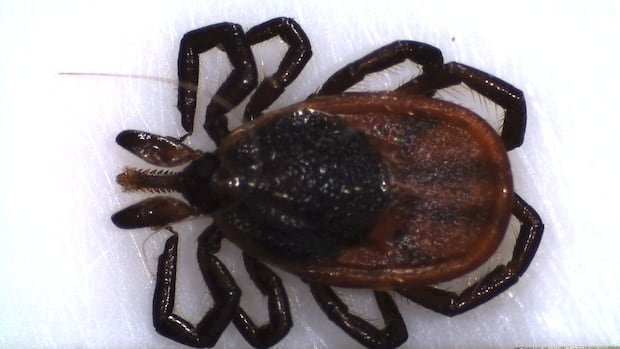

A snowy winter in Nova Scotia might not reduce the tick population as expected, cautioned experts. Surprisingly, deep and prolonged snow cover can provide insulation for ticks, aiding their survival. Laura Ferguson, from Acadia University’s biology department, explained that the thick snow layer shields ticks, allowing many to endure the winter.
Even though Nova Scotia experienced cold spells, the most effective temperatures for tick control arrived after snowfall, protecting the insects. The Halifax airport had continuous snow cover from January 18 to March 21, lasting 64 days, the longest period since 2020. Ticks typically seek sheltered areas under leaf litter to survive the winter without feeding for months.
While temperatures of 0°C to -5°C can sustain ticks for weeks or even months, consistent temperatures below -10°C or abrupt temperature fluctuations can lead to mortality. Jantina Toxopeus, a biology professor at St. Francis Xavier University, mentioned that ticks usually freeze below -15°C, but the rate of temperature drop affects their survival. Ticks can adapt better to gradual temperature changes compared to sudden drops.
Despite extreme cold events in the past, such as temperatures of -27°C, the tick population in Nova Scotia remained stable, indicating their resilience to harsh conditions. Ferguson predicted that this year’s tick season will likely remain consistent with previous years, given the robust tick population in the region.