
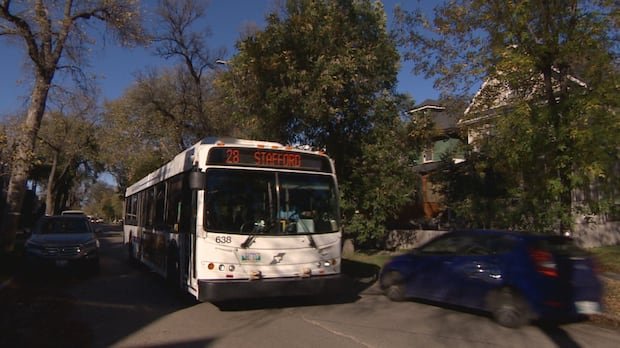

A city planning expert from the University of Manitoba is raising concerns about Winnipeg Transit’s recent network changes, stating that the alterations are negatively impacting lower-income individuals who heavily rely on the bus service. Orly Linovski, an associate professor in the city planning department, along with 16 endorsing groups, including the Canadian Centre for Policy Alternatives, the Manitoba Eco-Network, and the North End Women’s Centre, conveyed their worries to city council through a letter.
Linovski highlighted the extended and unreliable transfer times under the new system due to insufficient buses, leading to potential job and livelihood risks for commuters. She emphasized how delays in bus services could result in financial penalties for workers and additional charges for daycare pickups. The revamped transit system, introduced by Winnipeg Transit in late June, has faced widespread criticism for various issues such as stop distances and the absence of late-night services. While the city has made some adjustments, more changes are expected in December.
According to Linovski, urgent modifications are necessary, especially in a city like Winnipeg, where waiting times for transfers can be unreasonably long given the climate. She stressed the need for increased funding and political commitment to ensure adequate transit services, suggesting that merely adjusting frequencies on different routes could lead to reduced service on other routes.
Coun. Janice Lukes, chair of the city’s public works committee, acknowledged the limitations in enhancing bus services due to the city’s outdated funding model, urging for increased financial support from provincial and federal sources. Despite being in a transitional phase, Winnipeg Transit values feedback from riders and plans to implement significant route adjustments in the coming year.
Mayor Scott Gillingham highlighted the substantial growth in Winnipeg Transit’s operating budget and service enhancements, including the introduction of new zero-emission buses and extended late-night services. The mayor emphasized the city’s commitment to further improving transit services based on feedback and ongoing developments.
The North End Women’s Centre expressed concerns over the challenges faced by community members and staff with the new transit network, particularly affecting those living in poverty who heavily rely on public transportation. Accessibility issues, longer walking distances to bus stops, and confusion navigating the system have been significant hurdles for many individuals. Some clients have expressed discouragement with the changes, leading to increased travel times and safety concerns in certain areas.
Individuals like Janel Whincup, a counselor at the North End Women’s Centre, highlighted the difficulties faced by vulnerable groups, such as the elderly, people with disabilities, and families with small children, in adapting to the new system. She mentioned that some individuals are now reluctant to use the bus due to safety and accessibility issues, resulting in additional transportation costs like using ride-sharing services.
In conclusion, the current challenges faced by Winnipeg Transit underscore the importance of addressing accessibility, reliability, and service improvements to ensure that public transportation remains a vital lifeline for all residents in the city.