
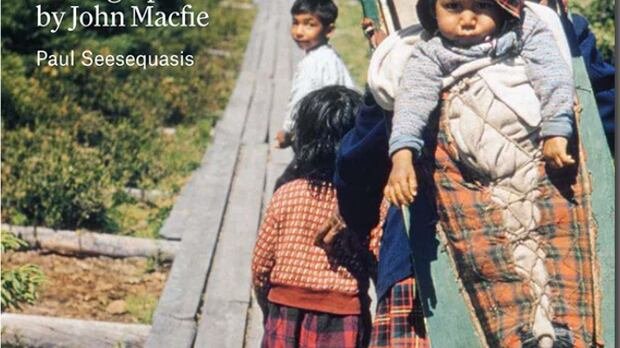

In the 1950s and 1960s, John Macfie, a trapline manager, extensively traveled across the Hudson Bay watershed, visiting communities like Sandy Lake and Fort Severn where traplines were thriving. Armed with his camera, he documented the daily lives of the Anishinaabe, Cree, and Oji Cree individuals he encountered. These captivating images have been compiled into a book titled “People of the Watershed.”
An exhibition showcasing these photographs is currently being held at the Lake of the Woods Museum in Kenora, Ontario, until December 21. Paul Seesequaisis, the curator of the exhibit and the author of the book, hails from the Willow Cree community in Saskatchewan.
Seesequaisis recently discussed his work with Mary-Jean Cormier on “Superior Morning,” shedding light on his efforts to recover and showcase these historical photographs of Indigenous people. He recounted how he stumbled upon John Macfie’s photos during the pandemic, sparking his interest due to their extensive coverage of the Hudson’s Bay watershed during a specific era.
Upon reaching out to John Macfie via Facebook, Seesequaisis discovered a remarkable individual in his early 90s who had worked as a trapline manager and amateur photographer. Macfie’s photography legacy, captured during his travels across northern Ontario, provides a unique glimpse into a bygone era when communities relied on the land and the fur trade for sustenance.
Exploring themes of revival and self-sufficiency, Seesequaisis highlighted poignant images from the collection, such as the Tikinagans used to carry babies and the story of Maria Mikenak, a woman living in the bush. He emphasized the importance of these photographs in preserving cultural practices and individual stories that might otherwise be forgotten.
Regarding the photographer-subject relationship, Seesequaisis noted that while some photographers may adopt a distant or extractive approach, John Macfie’s personal engagement and rapport with his subjects resulted in intimate and powerful images that transcend typical anthropological perspectives.
As the exhibition progresses, Seesequaisis has received messages from individuals recognizing their relatives in the photographs, underscoring the significance of these images in connecting communities with their past.
The exhibition provides a unique opportunity to witness and appreciate the rich cultural heritage and historical narratives captured by John Macfie’s lens, offering a window into a vanishing way of life in northern Ontario.
[End of rewritten article]