
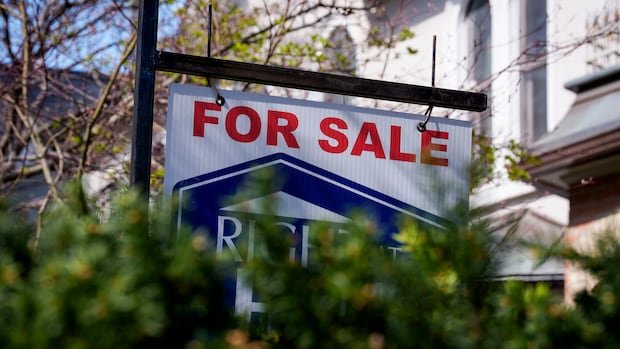

Ron Butler, a veteran in the mortgage industry for three decades, highlighted the significant shift in affordability for prospective homebuyers. He emphasized that in the past, individuals with modest incomes like grocery store managers or part-time nurses could easily gather the necessary down payment. However, Butler noted that the current reality, especially in the Greater Toronto Area, makes it nearly impossible for individuals with solid full-time jobs to save up for a home.
He emphasized that with an income of around $110,000 to $115,000, covering expenses like rent, food, and taxes leaves little room for accumulating a sufficient down payment for homes priced just under a million dollars. Previously, families earning $115,000 annually could consider homeownership in areas like Ajax, Burlington, or Hamilton, but now, such income levels are inadequate to purchase a home.
Recent data from the Canadian Real Estate Association revealed that the national average home price stands at $673,084, requiring a minimum down payment of over $42,000. In contrast, the Greater Toronto Area and Greater Vancouver have much higher average prices at $1,017,796 and $1,201,123, respectively, necessitating down payments of approximately $76,000 and $95,000.
The affordability challenge extends beyond major cities like Toronto and Vancouver, impacting middle-income earners nationwide. Reports indicate a substantial increase in home prices relative to incomes over the past two decades, creating a significant disparity. Many prospective buyers now rely on parental assistance or seek homes in regions where prices are relatively lower compared to incomes.
Experts underscore the urgent need for solutions to address the widening gap between home prices and incomes. They emphasize the importance of not only stabilizing housing costs but also boosting wages to enhance overall affordability across the country.