

Katelyn Bruckner, a resident near Hamilton’s Gage Park, typically frequents the city’s harbor weekly for coffee and walks with her dog along the waterfront. She expressed satisfaction with this year’s harbor experience compared to the previous year, which was marred by a foul-smelling algae bloom and subsequent decay that deterred many visitors.
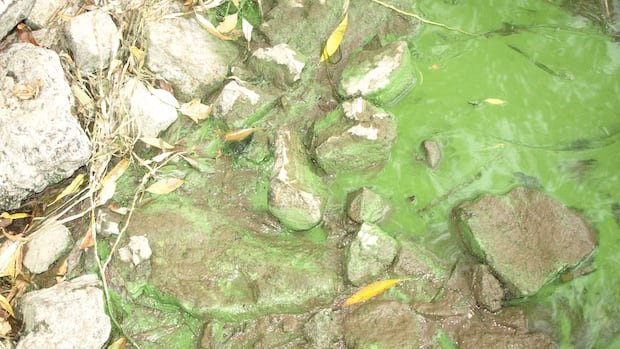
Describing the 2024 odor as reminiscent of “sour egg,” Bruckner mentioned avoiding the stretch from Bayfront Park to Pier 8 for weeks during that time. However, she was pleased that this summer passed without a similar issue, despite visible clusters of pea-soup-like substance in certain harbor areas that did not evolve into extensive, malodorous mats as seen in the past year.
Regarding the environmental factors influencing algae growth, Cari Vanderperk, the director of watershed management at Hamilton Water, emphasized the significance of sunlight, heat, and nutrients. She highlighted the difference in rain patterns between the two summers, explaining how intense rainstorms in 2024 led to nutrient runoff into the lake, fostering algae growth.
Vanderperk credited the minimal algae presence this year to less intense rainfall and prolonged ice cover in the harbor during the winter. She acknowledged the diversity of freshwater algae species, with blue-green algae receiving particular attention due to its toxicity.
Jennifer Bowman, a senior aquatic ecologist at the Royal Botanical Gardens, stressed that nutrient runoff into the harbor primarily stems from surrounding cities and sewage overflows, rather than agricultural sources. She advocated for rainwater absorption near its point of impact as a preventive measure, suggesting strategies like enhancing unpaved areas for natural absorption and redirecting rainwater at residences to prevent runoff into sewers.
Furthermore, Bowman highlighted upcoming stormwater rates in Hamilton that incentivize the adoption of permeable surfaces, thereby reducing runoff. She noted positive outcomes in Cootes Paradise’s vegetation due to improved water quality, with submerged plant life thriving and enhancing the ecosystem.
Residents like Larry Tagart expressed relief at the improved harbor conditions this year compared to the noxious odor experienced in 2024. Despite occasional faint smells near specific harbor spots, Tagart and others appreciated the overall positive experience along the waterfront during this season.
In conclusion, efforts to manage nutrient runoff and promote water absorption at the source have contributed to a more pleasant and environmentally sustainable harbor environment in Hamilton this year.