
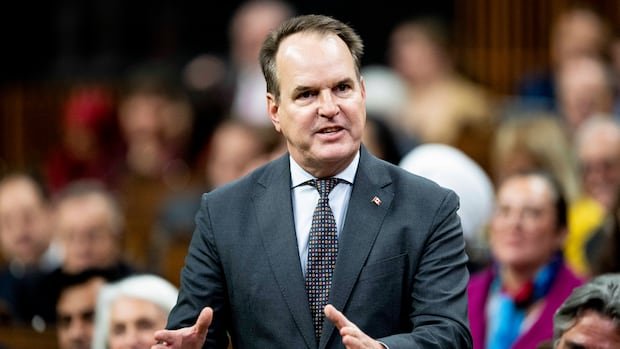

Liberal House leader Steven MacKinnon has stated that the government currently lacks the necessary votes to pass the upcoming federal budget. MacKinnon emphasized the importance of opposition parties considering whether they wish to trigger another election. With a minority government in place, MacKinnon asserted that the Liberals have a mandate to advance the country’s economic progress.
The Liberal government requires the cooperation of at least one other party to secure the budget’s passage, scheduled for November 4. Failure to pass the budget, being a confidence vote, could potentially lead to a snap election.
Opposition parties, including Conservative Leader Pierre Poilievre and Bloc Québécois Leader Yves-François Blanchet, have been vocal about their demands during discussions with Prime Minister Mark Carney. Poilievre is pushing for an affordable budget with tax cuts and a deficit under $42 billion, while also calling for the removal of the industrial carbon tax. Blanchet seeks increased federal health transfers, infrastructure investments, expansion of the rapid housing initiative, and higher Old Age Security payments for individuals aged 65 to 75.
MacKinnon criticized Poilievre’s demands as unattainable and expressed reluctance towards accommodating substantial revenue reductions sought by the Conservative leader. Despite earlier criticism from Blanchet regarding the lack of consultation on the budget, MacKinnon dismissed the remarks, highlighting the Bloc Québécois’ limited representation in the House.
While interactions with opposition leaders continue, MacKinnon acknowledged the challenging task of securing support for the budget. He emphasized ongoing conversations with opposition parties to gather their input, underscoring the necessity of making tough decisions to fulfill the mandate set by the Liberals.
Prime Minister Mark Carney has been preparing for the budget, aiming to bolster Canada’s economy amidst U.S. tariffs. Carney forewarned Canadians about forthcoming challenges and sacrifices, asserting the urgency of taking action to alleviate mounting pressures.
MacKinnon recognized the need for difficult choices in government operations to redirect resources towards investments. Highlighting the importance of enhancing supply chains to diversify markets and reduce reliance on the U.S., he emphasized the forthcoming budget’s focus on strategic investments and prudent spending decisions.