
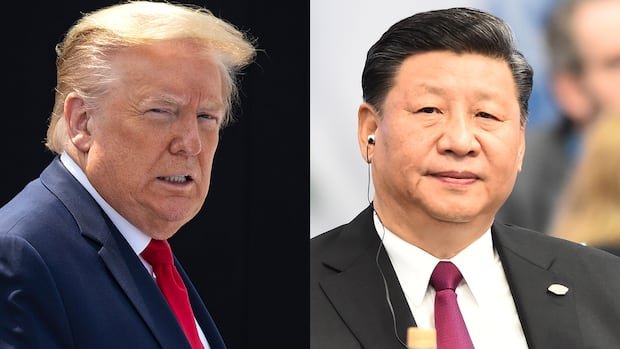

China retains significant influence over the U.S. in the rare earth minerals sector, despite both nations reaching a preliminary trade agreement prior to a meeting between President Donald Trump and Chinese President Xi Jinping. The encounter, scheduled during the Asia-Pacific Economic Cooperation (APEC) summit in Gyeongju, South Korea, marks Trump’s first meeting in his second term. This development occurs amid a trade war between the world’s largest economies, characterized by escalating tariffs exceeding 100%, posing threats to the global economy. China’s strategic use of its economic strengths as negotiating tools against White House pressures is evident.
Recent discussions between top officials from both countries have sparked optimism that tariffs could be avoided before the Trump-Xi meeting. U.S. Treasury Secretary Scott Bessent, together with U.S. trade representative Jamieson Greer and Chinese Vice-Premier He Lifeng, announced a significant framework agreement at the Association of Southeast Asian Nations summit in Kuala Lumpur. The agreement hints at a potential deal with China, as expressed by President Trump.
However, the trade truce remains fragile, reflecting the complex dynamics of U.S.-China relations. While specific details are still unclear, the agreement addresses various aspects, including the transfer of TikTok’s U.S. operations, resuming soybean purchases from U.S. farmers, and postponing the imposition of a 100% tariff on Chinese imports. Crucially, the deal involves China delaying its export controls on rare earth minerals for a year, a critical issue for the U.S.
Observers view this agreement as a recognition of the repercussions of a prolonged conflict. The commitment from both leaders to stabilize their bilateral relationship is crucial, acting as a vital safety valve amid deep-seated rivalry. The deal strikes a delicate balance, allowing both sides to claim partial victories while leaving room for further negotiations and potential actions.
Numerous unresolved issues, such as trade imbalances, China’s overcapacity, security concerns in the South China Sea, and technological competition, are unlikely to be fully addressed during the Trump-Xi meeting. The deep-seated mutual mistrust between the two countries complicates comprehensive negotiations, leading to a focus on smaller, manageable deals.
Speculation surrounding the face-to-face meeting intensified following formal invitations from Xi to Trump. The U.S. president’s positive remarks about his Chinese counterpart have added to the anticipation of the meeting. The recent developments underline Xi’s strong position and China’s dominance in critical mineral resources, particularly rare earth minerals.
China’s recent expansion of export regulations on rare earth minerals underscores its strategic advantage in this sector, given its near-monopoly on mining and processing. In response, Trump has threatened additional tariffs and export controls. The U.S. is endeavoring to catch up with China’s dominance by forging agreements with Japan, Pakistan, and Australia to secure critical mineral supplies.
Domestic political considerations and economic challenges further shape the leaders’ positions ahead of the meeting. Xi’s consolidation of power and focus on technology self-reliance contrast with Trump’s administration facing potential government shutdowns. The stakes are high for both countries, as the global community looks to avoid confrontation between the world’s top economies.