
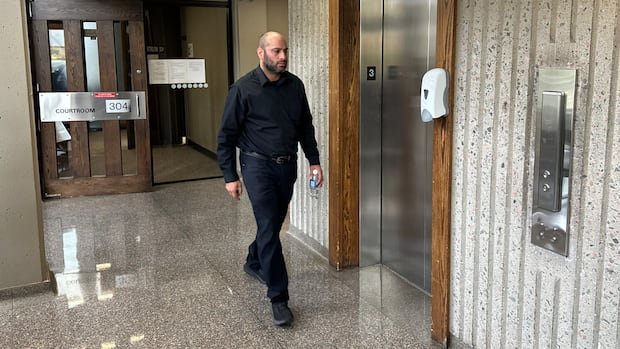

In Nova Scotia Supreme Court, prosecutor Rob Kennedy argued that Ryan Sawyer’s death at the hands of Halifax Alehouse bouncer Alexander Levy on Dec. 24, 2022, was a tragic and avoidable incident. Sawyer, 31, lost his life due to what was described as Levy’s aggressive and disproportionate actions after Sawyer and his brother were kicked out of the bar following an altercation.
During the trial, it was revealed that Sawyer’s twin brother, Kyle, had a confrontation with Levy outside the bar, which escalated into a physical scuffle involving the bouncers. Levy claimed he was acting in self-defense, stating that he had restrained Ryan Sawyer to prevent further harm during the altercation.
Levy testified that he had used a chokehold on Ryan Sawyer for a brief period, believing it to be a safe and effective technique based on his experience in security. However, the prosecution argued that the sustained pressure on Sawyer’s neck led to his death due to lack of oxygen to the brain.
The defense contended that Sawyer’s death was unforeseeable and that Levy had not intended to cause harm. They highlighted Levy’s attempts to control the situation and prevent harm to others, emphasizing that he had only used the chokehold briefly.
Prosecutor Kennedy disputed this, stating that Levy had other options to handle the situation and that his actions had unnecessarily escalated the conflict. The court heard conflicting testimonies regarding the duration and severity of the chokehold, with Kennedy alleging that Levy had kept Sawyer in the hold for a longer period than claimed.
The trial also featured video evidence showing the physical altercation outside the bar, with suggestions of excessive force used by Levy. The prosecution maintained that Sawyer’s death could have been prevented if Levy had chosen a less harmful approach or sought assistance from other bouncers.
Justice James Chipman is set to deliver his verdict on Nov. 26, determining the outcome of Levy’s trial for manslaughter in connection with Ryan Sawyer’s death.