
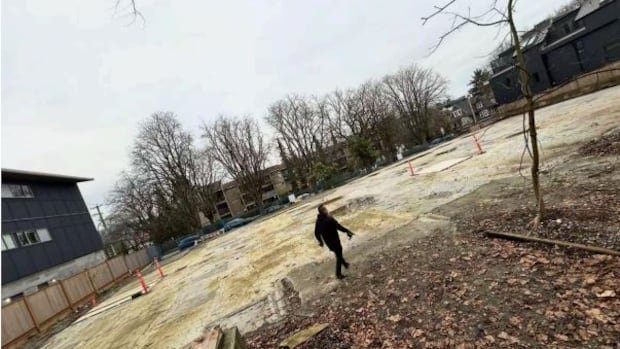

Fu De Ren, the owner of a property damaged by fire, has faced legal battles defending himself in various proceedings. Ren aimed to reduce the assessed value of his property from $19 million to $10 million, a move that could lead to additional costs for his self-representation efforts. The property assessment appeals board discovered that Ren’s arguments contained fictitious case law, potentially stemming from AI “hallucinations,” which prompted unnecessary investigations and research by the assessment authority and the board.
Ren’s saga with B.C. Assessment began over two years ago following a significant fire that left his apartment building on East 10th Avenue uninhabitable. Subsequent incidents, including another fire and disputes with tenants and authorities, escalated the situation. Ren’s submissions to the property assessment appeal board highlighted a broader issue of fictitious citations created through AI, a trend observed across various courts and tribunals in British Columbia over the past year.
The appeal board found discrepancies in Ren’s arguments, noting that the cases he referenced did not exist in Canadian legal databases, indicating the use of fabricated legal precedents. Despite Ren’s claims, the board ultimately reduced the property assessment to account for the property’s potential as a high-density residential tower, acknowledging the risks associated with purchasing a partially demolished property.
The board’s encounter with non-existent case law submissions is part of a larger pattern witnessed in recent months, with self-represented individuals falling victim to AI-generated inaccuracies in legal proceedings. The implications of relying on AI for legal research have raised concerns among decision-makers at different levels, emphasizing the importance of transparency when using such technology.
Ren’s case underscores the challenges faced by individuals navigating legal processes without legal expertise, with decision-makers grappling with the impact of AI on tribunal proceedings. The evolving landscape of AI in legal research necessitates caution, as inaccuracies in AI-generated submissions can potentially jeopardize the integrity of legal cases. Despite Ren’s assertion of good faith in his appeal, the board is evaluating whether to seek reimbursement for costs incurred due to the inaccuracies in his submissions.