

Clearwater River Dene Nation in Saskatchewan has adopted an innovative approach to educating its students. Located approximately 520 kilometers north of Saskatoon, the community utilizes a seasonal land-based learning method to enhance student engagement in education.
Grade 11 student Landon Moise expressed enthusiasm for the unique learning opportunities provided by this approach. Through the program, students have access to activities such as interacting with scientists, conducting sampling exercises, and collaborating with industry professionals, like NexGen at their future mine site.
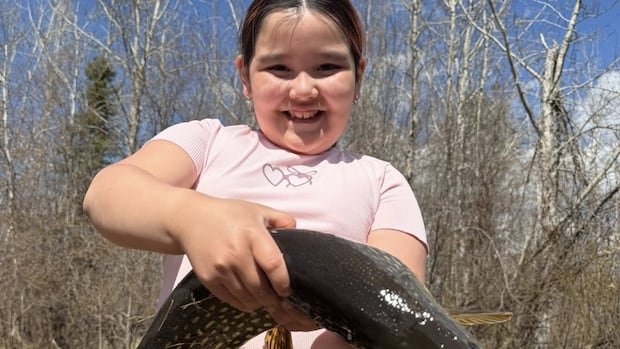
Recently, students at Clearwater River Dene Nation have been exploring the traditional practice of snare fishing. Led by the school’s land-based educator, Paul Haynes, students learn to fashion fishing poles using flexible branches sourced from poplar or birch trees. The process involves attaching rabbit snare wire to create functional fishing snares, with pole lengths varying between four to 12 feet based on location.
Locating and catching fish is a skill that students develop through this activity. Haynes described the process as an art form, emphasizing the importance of understanding fish behavior and positioning the snare accurately. Despite initial challenges, students quickly grasp the technique, with some becoming proficient at snare fishing.
Following the disruptions caused by the COVID-19 pandemic, the school had to adapt its teaching methods to re-engage students. The transition from online learning back to traditional classrooms was challenging for many, leading to attendance issues and decreased motivation. Implementing the land-based learning model has reignited students’ interest in education, fostering a renewed appreciation for practical knowledge.
The school pairs older students with younger ones to facilitate mentorship and ensure safety during outdoor learning activities. This collaborative approach allows experienced students to share their skills and knowledge with their peers, creating a supportive learning environment that spans across different age groups.
In addition to teaching traditional fishing techniques, the program emphasizes the ethical and responsible exercise of hunting and fishing rights. Students learn about respecting the environment, handling fish properly, and releasing them back into the water with care. Any fish caught are distributed among families, reinforcing the importance of ethical practices and sustainability.
Elders Doreen Louise Moise and Pauline Fontaine play a vital role in passing down traditional knowledge to the students. Referred to as “hama,” meaning grandmother, they teach the children how to clean and prepare the fish they catch. This intergenerational exchange of knowledge preserves cultural traditions and ensures their continuity for future generations.
High school student Carmen Haineault highlighted the value of teaching younger children proper fishing techniques and respect for nature. For many students, this program offers a unique opportunity to learn essential skills that may not be readily available at home. By instilling a sense of responsibility and appreciation for nature, the land-based learning model at Clearwater River Dene Nation is nurturing a new generation of environmentally conscious individuals.