
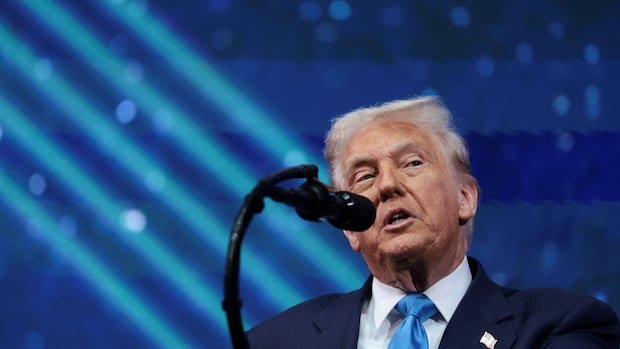

U.S. President Donald Trump has directed the U.S. military to resume nuclear weapons testing immediately, marking the end of a 33-year testing hiatus. The announcement was made by Trump on his social media platform, Truth Social, while en route to meet Chinese President Xi Jinping in Busan, South Korea. Trump emphasized the need for the Pentagon to test the U.S. nuclear arsenal on par with other nuclear-capable nations.
This decision comes in the wake of Russia’s recent successful testing of a Poseidon nuclear-powered super torpedo, a development that has raised concerns among military analysts due to its potential to cause significant damage to coastal areas through radioactive ocean swells.
Trump’s directive to restart nuclear testing has been met with criticism, particularly from China, which has significantly expanded its nuclear stockpile in recent years. Beijing has nearly doubled its arsenal to an estimated 600 nuclear weapons in 2025 from 300 in 2020, with projections suggesting it could possess over 1,000 weapons by 2030.
In response to Trump’s announcement, a Chinese Foreign Ministry spokesperson urged the U.S. to uphold its obligations under the Comprehensive Nuclear Test Ban Treaty and refrain from conducting nuclear tests. Despite the criticism, Trump defended the decision, stating that it was necessary for the U.S. to keep pace with other nuclear powers.
While concerns have been raised about the potential repercussions of renewed nuclear testing, Trump dismissed fears of heightened nuclear risks, emphasizing the importance of maintaining a strong nuclear deterrent. The move to resume nuclear testing has reignited discussions about nuclear arms control, with Trump expressing a desire to engage in dialogue with Russia and China on limiting their nuclear arsenals.
The decision to resume nuclear weapons testing has sparked reactions from various stakeholders, with calls for caution and concerns about the implications for global nuclear proliferation efforts. The Arms Control Association has criticized the move, questioning the need for the U.S. to conduct explosive nuclear tests for the first time since 1992. Critics argue that the decision could lead to a new wave of nuclear testing by other nations, potentially undermining non-proliferation efforts and international treaties.
Trump’s push for nuclear arms control discussions with Russia and China has elicited mixed responses, with Beijing expressing reluctance to participate in disarmament negotiations given the vast disparity in nuclear capabilities. The move to resume nuclear testing underscores the complex dynamics surrounding global nuclear security and the challenges of arms control in an increasingly volatile geopolitical landscape.