
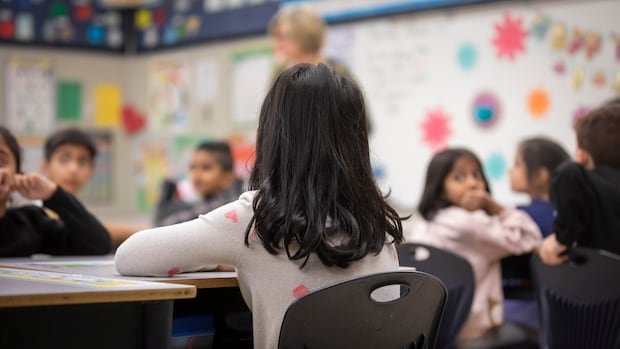

Students, parents, and educators in Alberta were up early on Wednesday, preparing for the return to school after a provincewide teachers’ strike. The strike, which lasted for weeks, came to an end as the Alberta government swiftly passed a bill utilizing the notwithstanding clause. This move compelled 51,000 teachers from public, Catholic, and francophone schools to resume their duties, despite 90% of them previously rejecting the imposed deal during negotiations.
The atmosphere was a mix of emotions as around 750,000 students filled classrooms across the province once again. Lucy Lacoursiere, whose husband was a striking teacher, expressed conflicting feelings while dropping off her daughters at an elementary school in Edmonton. Grade 11 student Giah Rai shared similar sentiments, expressing a desire for the best for their teachers and feeling disheartened by the circumstances.
Parents like Adjaino Enyemike, with five children in school in Edmonton, felt relieved to see their kids back in school but were torn about the teachers being forced back. The hope was for the parties to address the teachers’ demands. Robyn O’Brien, a parent with a kindergartener, emphasized the need for the government to rebuild trust with the public and supported the teachers’ right to strike.
The provincial government announced the formation of a task force to tackle issues such as class sizes and support for students with behavioral challenges or English as a second language, which were key points of contention during negotiations. Educators stressed that current classroom conditions were unsustainable and affecting their ability to teach effectively.
Concerns were raised about the lack of support and resources in schools, with parents sharing stories of their children facing challenges due to insufficient assistance. As schools resumed, activities like sports and performing arts were expected to be impacted. Students worried about the missed instructional time and its impact on their education, especially those in higher grades preparing for post-secondary opportunities.
The government’s decision on how to make up for the missed school days remained pending, with students like Grade 12 student Noah Masters expressing fears about the implications for their diplomas and university admissions. While diploma exams scheduled for November were made optional, those set for January and June remained unchanged, adding to the uncertainty surrounding academic assessments. Parents and students alike expressed concerns about the pressure to catch up on missed learning and the stress it could bring.
Overall, the community grappled with the aftermath of the strike and its implications on both students and educators, highlighting the need for addressing educational challenges and ensuring a supportive learning environment for all.