

Stocks experienced a decline on Wall Street on Tuesday, with a sell-off in major technology stocks impacting markets globally. Concerns about potential interest rate hikes by the year’s end contributed to the downturn.
The S&P index dropped by 1.4%, following a period of 11 out of 12 weeks with gains, primarily driven by technology stocks. The Dow Jones Industrial Average, less reliant on tech stocks, initially rose but ended the day down by 0.1%. The Nasdaq Composite fell by 2.2%.
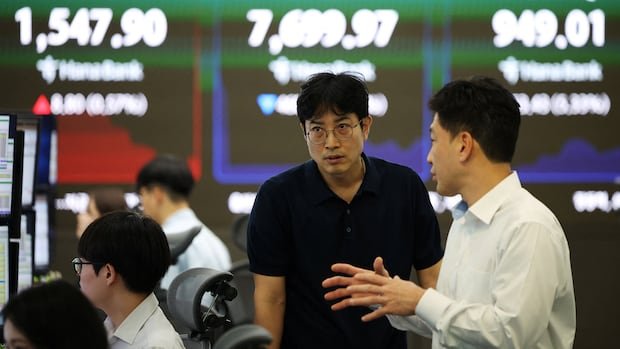
Canada’s primary stock index, the TSX/S&P, closed slightly lower by 0.2%. Markets in Asia and Europe also experienced declines, with South Korea’s KOSPI plummeting by 10%.
The technology sector bore the brunt of the market decline, particularly companies that have seen significant value increases amidst the artificial intelligence technology hype. These high-priced tech stocks exerted notable influence on the broader market’s performance.
Despite more stocks gaining than falling within the S&P 500 on Tuesday, tech companies overshadowed gains in other sectors. Micron Technology saw a 13.2% drop, Nvidia fell by 4.1%, and Samsung Electronics in South Korea declined by 12.3%.
SpaceX fluctuated during early trading but closed 1% higher. The space exploration and AI company recently had a successful market debut and intends to raise funds through a bond offering for AI development.
In the oil market, the price of Brent crude oil remained steady around $77 US per barrel. This is higher than the levels seen before the Iran war began four months ago, where prices were around $70 US per barrel.
The anticipation of interest rate hikes in the near future has deflated the recent surge in AI-related stocks, as traders fear the impact of higher rates on economic growth. Technology stocks have seen substantial gains, propelling major indexes to record highs in 2026.
Analysts have cautioned about a potential downturn in technology stocks that have been heavily investing in AI technology. The prospect of higher interest rates could restrict future spending and impact investment prices.
The U.S. Federal Reserve has indicated the possibility of raising interest rates at least once before the year’s end. Market sentiment suggests an 85% likelihood of a rate hike in 2026, up from 60% the previous week.
Asian and European markets followed the trend, with losses in semiconductor and chip-equipment makers weighing on European shares. Japan’s Nikkei 225 index dropped by 3.6%, while South Korea’s KOSPI plunged by 10% from previous highs due to a tech stock sell-off and regulatory concerns in the semiconductor sector.
Overall, global markets reacted to concerns over potential interest rate hikes and specific sector vulnerabilities, leading to a widespread decline in stock values.