
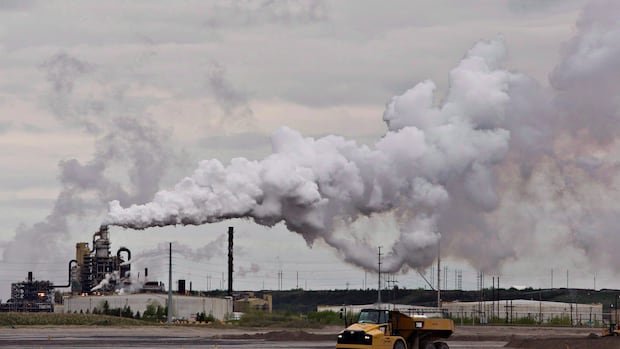

After much speculation, the federal government is indicating its plan to remove the oil and gas emissions cap, albeit with certain conditions attached. The latest budget did not explicitly state the elimination of the contentious Trudeau-era proposal but outlined specific prerequisites for its abandonment.
According to the budget, the implementation of “effective” carbon pricing, improved methane regulations, and the widespread deployment of carbon capture and storage would render the oil and gas emissions cap unnecessary as it would have minimal impact on reducing emissions. This conclusion was presented in “Canada’s Climate Competitiveness Strategy” introduced in the 2025 budget by the Carney government.
Finance Minister François-Philippe Champagne emphasized the new approach to the emissions cap in a press conference preceding the budget presentation. He highlighted that certain steps must be taken, and once the conditions are met, the cap will no longer be needed. However, the fulfillment of these conditions is crucial.
A year from the announcement of draft regulations by the Trudeau government, the final regulations for the emissions cap were never put into effect. The strategy unveiled the intent of Prime Minister Mark Carney’s new Liberal government to continue with some of the previous administration’s climate policies, including clean electricity regulations, finalization of methane regulations, and clean fuel regulations.
While the budget did not commit to proceeding with Canada’s 2035 electric vehicle sales mandate, it mentioned forthcoming announcements regarding “the next steps.” The strategy notably emphasizes industrial carbon pricing, aiming to elevate the existing systems in provinces like Ontario, Saskatchewan, and Alberta to meet the federal benchmark, with a proposed increase to $170 per tonne by 2030.
Moreover, the budget proposes to define a trajectory for the carbon price towards achieving net-zero emissions by 2050, seeking a “pan-Canadian agreement” on this target. Alberta Premier Danielle Smith expressed cautious optimism regarding the federal government’s conditional decision to withdraw the emissions cap, citing ongoing negotiations for a memorandum of understanding between the Alberta and federal governments.
Beyond regulatory frameworks, the strategy focuses on incentivizing companies to invest in emissions reduction measures, stressing investment promotion over prohibitions. Natural Resources Canada is set to establish a critical minerals sovereign fund, allocating $2 billion over five years to facilitate equity stakes in mines, off-take agreements, and loan guarantees.
The strategy underscores the necessity of tripling current investment levels in battery storage, wind and solar expansions, and interprovincial interties for distributing low-carbon electricity nationwide. To encourage such investments, the previous Liberal government introduced investment tax credits in the 2021 budget, with plans to implement the outstanding clean electricity investment tax credit through legislation.
Furthermore, the government plans to update its “greenwashing legislation” aimed at curbing false environmental claims, with adjustments to reduce investment uncertainty. The budget includes provisions for the Youth Climate Corps, allocating $40 million over two years to train young Canadians for rapid responses to climate emergencies.
In a bid to enhance competitiveness with the U.S., changes to the tax system are proposed to benefit “low-carbon liquefied natural gas (LNG) facilities,” offering tax write-offs for expenses related to manufacturing and processing buildings before 2030, along with reinstating accelerated capital cost allowances for LNG equipment. Green Party Leader Elizabeth May criticized these measures, labeling them as fossil fuel subsidies and suggesting potential amendments before voting in favor of the budget.