
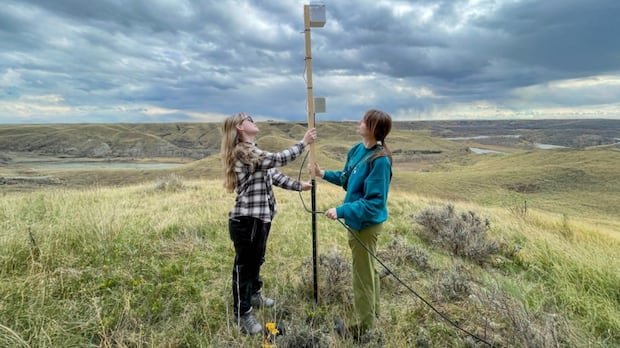

A unique research initiative led by two graduate students at the University of Windsor is actively monitoring the nocturnal migration patterns of birds across Canada. Natalie Emerick and Madison Bygrove have set up 100 acoustic recorders from Vancouver Island to Newfoundland, capturing bird sounds with the help of AI technology known as Motus Audio.
The specially designed box recorders, equipped with microphones pointing towards the night sky, collect and categorize the nocturnal calls of birds as they communicate during their journeys. This pioneering project aims to shed light on the often overlooked nocturnal behaviors of birds during migration.
Emerick highlighted the significance of this research, emphasizing that similar studies have not been conducted in Eastern Canada. The innovative technology enables the researchers to efficiently process extensive data collected each night, which would otherwise be a daunting task without such advanced tools.
By collaborating with existing Canadian migration monitoring networks and engaging various volunteers, Emerick and Bygrove have strategically placed their devices across the country. They have observed unexpected participation from individuals who are not traditional bird enthusiasts, showcasing a broader community interest in bird migration studies.
The researchers are particularly interested in studying the impact of artificial night light on bird behavior and navigation. By analyzing the differences in bird calls between brightly lit and dark areas, they aim to understand how artificial light affects bird communication and orientation during migration.
As the fall migration season approaches, Emerick and Bygrove anticipate gaining valuable insights from the collected data. They are continuously refining their algorithms to improve species identification accuracy and enhance the efficiency of their monitoring efforts.
The Motus Audio technology, initially developed with federal funding, has facilitated the creation of an extensive “audio curtain” across Canada. Ecologists like Ryan Norris recognize the value of this research in tracking bird movements through challenging environments like the boreal forest, where traditional monitoring methods are limited.
Norris emphasized the difficulty in identifying bird species based on their flight calls and praised the AI model for its effectiveness in processing complex nocturnal sounds. The research aims to provide a comprehensive understanding of bird migration patterns throughout the seasons, offering valuable insights for conservation efforts.
By leveraging advanced technology and collaborative networks, the University of Windsor researchers are pioneering a groundbreaking approach to studying nocturnal bird migration, contributing to a deeper understanding of avian ecology and behavior.