
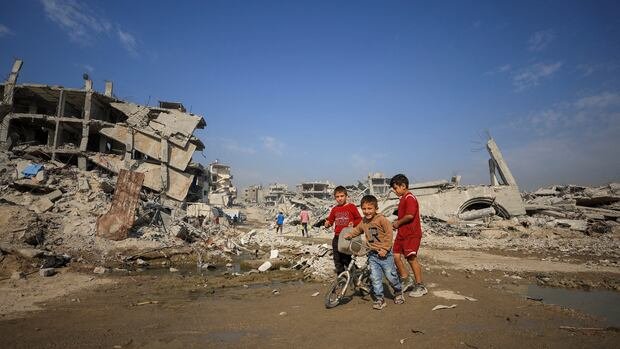

Thousands of aid packages are stranded in Jordan, Egypt, and Israel, as relief organizations express concern over the limited flow of assistance reaching Gaza, nearly four weeks after the ceasefire between Hamas and Israel. With the approach of colder weather, hundreds of thousands of individuals in Gaza are still living in deteriorating makeshift shelters, lacking adequate protection from the elements following Israel’s extensive military campaign in the densely populated area.
Highlighting the urgency of the situation, Angelita Caredda, the Middle East and North Africa Regional Director for the Norwegian Refugee Council (NRC), emphasized the critical need for swift and unimpeded access to deliver essential shelter materials to Gaza. Despite the ceasefire agreement starting on October 10, Israeli authorities have rejected numerous requests from aid agencies to bring in urgently required supplies like tents, bedding, kitchen sets, and blankets.
The NRC, at the forefront of addressing the shelter crisis in Gaza, revealed that a considerable amount of shelter and non-food items are stuck in neighboring countries awaiting approvals, leaving around 1.5 million people vulnerable to increasingly harsh conditions. The ceasefire was expected to facilitate the entry of aid trucks into Gaza to alleviate food shortages, following reports of famine in the region two months prior.
Manal Salem, a resident of a tent in southern Gaza, expressed concerns over the deteriorating condition of her shelter, underscoring the dire need for proper shelter, food, and resources. The ongoing challenges with aid distribution are attributed to Israeli restrictions and logistical issues, resulting in a limited number of trucks delivering supplies to Gaza daily.
Despite efforts to increase aid flow post-ceasefire, challenges persist in ensuring adequate access to food and shelter for Gaza’s population. While progress has been made in some areas, significant disparities remain between the southern and northern regions of Gaza in terms of access to essential resources. The World Food Program (WFP) highlighted the critical need for swift action to address the pressing humanitarian crisis in Gaza as winter approaches, emphasizing the importance of comprehensive support to meet the diverse nutritional needs of the population.
The continuous lack of fuel, including cooking gas, poses additional challenges to nutritional efforts in Gaza, with over 60% of residents resorting to burning waste for cooking. The protracted conflict, which erupted in October 2023, has resulted in significant casualties and destruction, underscoring the urgent need for sustained humanitarian assistance to alleviate the suffering of the population in Gaza.