
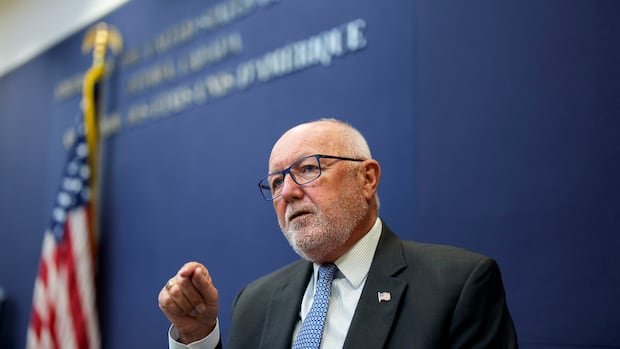

U.S. Ambassador to Canada Pete Hoekstra has sought to diminish concerns about the potential for American support of political movements in Canada under the new national security strategy. The strategy outlines the U.S. government’s intention to back governments, political parties, and movements that align with its principles and strategy.
During an extensive year-end interview with The Canadian Press, Hoekstra remarked that the language in the national security document is open to various interpretations. He emphasized the need to observe how events unfold, stating that the wording could be broadly understood.
While Hoekstra indicated that the U.S. is unlikely to interfere in domestic politics, he criticized Ontario for airing an advertisement on American television networks featuring former U.S. president Ronald Reagan criticizing tariffs. He characterized Ontario’s ad campaign as a targeted political intervention against the president.
Former diplomats and critics caution that the new strategy could pave the way for American involvement in Canada’s internal affairs. Bob Rae, a former Canadian ambassador to the United Nations, expressed concerns in Policy Magazine that the U.S. government could actively support political parties and movements in Canada aligning with Trumpian policies.
Artur Wilczynski, a former Canadian diplomat, labeled the document as “deeply problematic” and suggested that it signals potential U.S. support for actors favoring Trump’s policies or those hostile to Canada. He emphasized that the U.S. could utilize various means, including trade craft instruments, to advance its objectives in the region.
Hoekstra dismissed the idea of Canada becoming the 51st state and emphasized the positive relationship between the two nations. He highlighted a light-hearted exchange between President Trump and Prime Minister Carney as evidence of their strong rapport.
Stephanie Carvin, an international relations professor at Carleton University, expressed concerns about the implications of the national security strategy for America’s allies, including Canada. She highlighted the potential for leveraging parts of the Trump political coalition in influencing movements in Canada, citing examples such as the Freedom Convoy donations and Donald Trump Jr.’s support for disruptive movements.
Overall, the national security strategy has raised apprehensions about potential American interference in Canada’s political landscape, sparking debates about the implications of the U.S. government’s stance on supporting aligned movements and parties.