
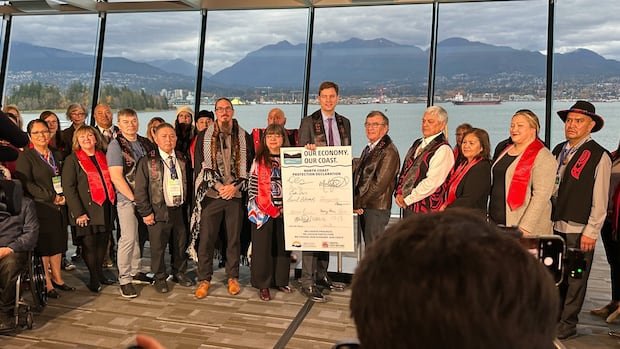

British Columbia Premier David Eby joined forces with representatives of various First Nations groups from the northern coast of B.C. to endorse and formally endorse a plea urging Ottawa to maintain the prohibition on oil tankers in the northern waters of the province. The North Coast Protection Declaration represents B.C.’s latest effort to pressure the federal government to safeguard the environment and the self-governance of First Nations, especially in light of Alberta Premier Danielle Smith’s advocacy for a new private-sector pipeline to transport crude oil to the northern B.C. coast for export to Asia.
The declaration emphasizes the catastrophic consequences of a crude oil spill in the region, warning of the destruction of substantial economic activities along the coast and the enduring ecological harm it would cause. Premier Eby denounced any proposal to lift the ban, asserting that it lacks any logical justification.
At the heart of the issue is the imperative to safeguard the ecological integrity of the area, which has been a longstanding priority for local residents. Marilyn Slett, president of the Coastal First Nations and chief councillor of Heiltsuk First Nation, underscored the importance of maintaining a healthy and thriving ocean to sustain their traditional way of life.
The signing of the declaration by Eby, Slett, and other coastal First Nation leaders took place during the 10th B.C. Cabinet and First Nations Leaders’ Gathering in Vancouver. The declaration outlines the vital connection between the environment and the economic activities on the North Coast, supporting thousands of livelihoods in sectors like fisheries, tourism, renewable energy, and stewardship.
The declaration calls attention to the voluntary exclusion zone established in 1985 and the implementation of the Oil Tanker Moratorium Act in 2019, which restricts oil tankers carrying over 12,500 metric tons of crude oil from operating in certain areas of B.C.’s northern waters. Concerns about the potential threat to this protection arose with the introduction of the Building Canada Act by Ottawa, enabling the fast-tracking of projects deemed nationally significant, including the proposed oil pipeline to the B.C. coast.
Premier Eby stressed the necessity of preserving B.C.’s waters, cautioning against divisive political tactics that could undermine the national dialogue on Canada’s unique economy. While some First Nations support the notion of a new pipeline to the B.C. coast as a means of fostering economic reconciliation, ensuring environmental protections and upholding treaty rights remains a paramount concern for Indigenous communities.
The federal government has assured that Indigenous communities will be consulted throughout the project selection process, with further consultations planned for nations potentially affected by the chosen projects. Eby clarified that despite the signing of the declaration, there are currently no concrete plans for a pipeline project across the north, emphasizing the need for a credible proponent and extensive engagement with First Nations.