
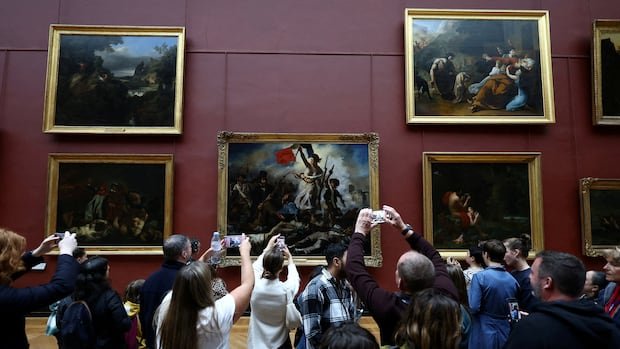

France’s Louvre Museum initiated a security assessment a decade ago, but the proposed enhancements are scheduled for completion only by 2032, as per a report from the state auditor released before a significant heist last month. The audacious robbery, where four thieves absconded with jewels valued at $143 million Cdn, cast doubt on the museum’s reputation as a custodian of its extensive collection. Officials conceded that security measures were inadequate.
Although four suspects have been charged in connection with the heist, the stolen treasures remain unrecovered. An excerpt from the report, made public by the national audit office, known as the Cour des Comptes, shortly after the robbery, revealed that by 2024, only 39% of the museum’s rooms were equipped with cameras. A security audit initiated in 2015, which highlighted insufficient monitoring and crisis preparedness, led to a security works tender only at the end of last year.
The report highlighted delays in infrastructure updates due to extravagant spending on artwork, with only a quarter on display to the public, post-pandemic relaunch projects, inefficiencies, and ticket fraud. It also criticized the lack of feasibility studies and oversight in the museum’s developmental initiatives. The report recommended several measures, including reducing acquisitions, increasing ticket prices, and upgrading digital infrastructure and governance.
Addressing the chronic underinvestment in information systems, the auditor stressed the need for the museum to enhance its internal control function. The report emphasized the importance of implementing the recommended changes swiftly in light of the recent heist. The Louvre intends to introduce additional security measures post-robbery, including anti-intrusion devices and anti-vehicle ramming barriers on nearby public roads by the year-end.
Following widespread disarray complaints, France launched an ambitious project in January, focusing on a new space dedicated to Leonardo da Vinci’s iconic painting, the Mona Lisa, along with enhanced security measures. Culture Minister Rachida Dati acknowledged the urgency of technical upgrades, echoing the call for prompt corrective actions. Louvre Director Laurence des Cars supported most of the auditor’s suggestions, emphasizing the necessity of the museum’s long-term transformation plan to tackle structural challenges.