
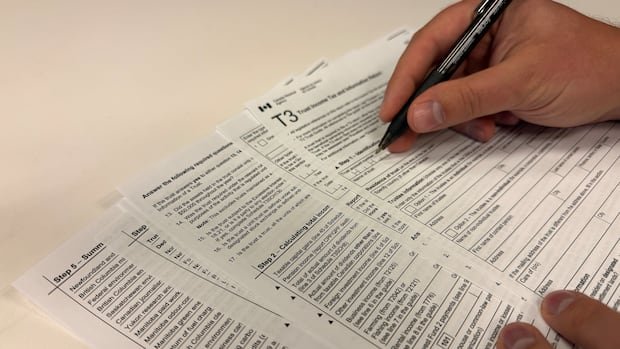

Canada’s tax agency has announced that Canadians with simple trusts, also known as bare trusts, will not be required to submit T3 tax forms for the upcoming tax season. However, legislative changes currently being reviewed by the House of Commons indicate that these requirements are likely to be enforced by 2027.
The Canada Revenue Agency (CRA) stated on Tuesday that the obligation to file T3 tax forms for bare trusts has been delayed once again for this year. This decision follows the agency’s initial postponement of the requirements during the tumultuous 2024 tax filing season.
Introduced in 2022, new tax reporting regulations for trusts were intended to come into effect for the 2023 tax year. While these rules aimed to target issues like money laundering, terrorist financing, and tax evasion, many Canadians with simple bare trusts faced the burden of completing intricate forms.
In a bare trust arrangement, a trustee holds legal ownership of a property or asset without beneficial ownership. The trustee’s role is limited to holding legal title to the property and must act based on instructions from the beneficiary.
Unlike more intricate trusts typically established with legal counsel, bare trusts can arise informally, such as when a parent co-signs a mortgage with their child or when an elderly parent includes their children on a bank account for bill payments.
The Finance Department introduced proposals to clarify the rules and exempt certain straightforward bare trust relationships. These proposals were presented as part of Bill C-15, the budget implementation act, scheduled for review by Parliament upon MPs’ return.
While C-15 is under consideration, the CRA has announced that bare trust reporting requirements will not be enforced. However, the agency indicated that these changes are expected to apply for the 2026 tax year.
The proposed changes would exempt specific bare trusts, including those with assets under $50,000, true joint ownership situations like shared bank accounts between spouses, parents listed on a child’s residence for mortgage co-signing, and cases where spouses jointly occupy a home titled in one spouse’s name. Additionally, adult children named on elderly parents’ bank accounts under $250,000 could also qualify for exemption.
Ryan Minor from Chartered Professional Accountants of Canada expressed optimism that the implementation of the new rules next year would allow ample time for affected individuals to prepare adequately.
The CRA’s handling of the 2024 pause in reporting requirements was criticized by the Taxpayers’ Ombudsperson. Despite the pause, more than 44,000 taxpayers filed bare trust forms that year, leading to wasted resources.
François Boileau, the Taxpayers’ Ombudsperson, highlighted the CRA’s failure to timely inform taxpayers and professionals about the new filing obligations. To prevent a similar scenario with the upcoming updates, clear guidance from the tax agency will be crucial to ensure understanding and compliance among Canadians.
Filing bare trust forms does not result in taxes owed, but failure to file could lead to significant penalties. The passage of C-15 through both houses of Parliament is necessary for it to become law.