
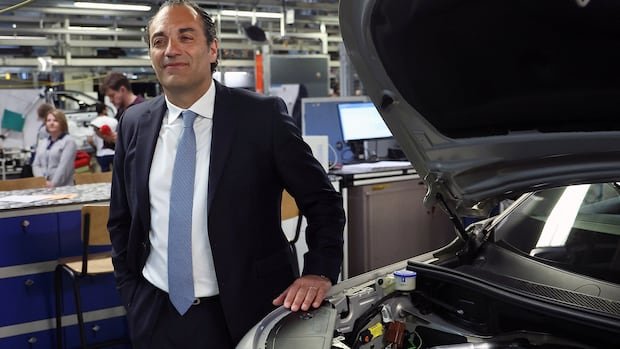

Stellantis CEO Antonio Filosa emphasized that it will take time to see the results of a significant strategic transformation after the global automotive giant reported second-quarter financial results below expectations, causing a drop in its stock value.
Earlier this year, Stellantis unveiled a $70 billion turnaround plan aimed at introducing 60 new vehicle models by 2030 and recapturing lost market share in the U.S. high-margin segment. Filosa, who succeeded Carlos Tavares in late 2024, highlighted the company’s key objectives of expanding market reach, cutting production costs, and enhancing product quality during a recent analyst briefing. However, progress in these areas has been gradual.
Filosa acknowledged the challenges faced by the company, stating, “These are not overnight issues to resolve. We are on the right path, executing diligently and swiftly to address them.”
Stellantis observed a 6% sales increase in North America, driven by an 11% surge in sales of profitable Ram pickup trucks and Jeep models targeted for market share growth in the U.S. The Chrysler Pacifica minivan, manufactured in Windsor, also recorded a notable 7% sales boost year-over-year. Conversely, revenue in Europe remained stagnant due to pricing adjustments made to combat rising competition from Chinese automakers.
To counter the competitive threat from Chinese counterparts like BYD and Chery, Filosa revealed plans to leverage Stellantis’ partnership with Chinese joint-venture company Leapmotor, which has seen a substantial sales surge in Europe in the first half of 2026. Stellantis is actively developing cutting-edge vehicle platforms for the European market to match or exceed Chinese standards of competitiveness.
Despite a significant improvement in second-quarter adjusted earnings before interest and tax to $884 million, primarily driven by robust North American sales, the figure fell short of analyst expectations. This resulted in a 4.31% decrease in the company’s Milan-listed shares at the close of trading.
Citi analysts criticized Stellantis for maintaining a low adjusted operating income margin of 1.8%, attributing it to factors such as price reductions in Europe, increased administrative and research costs, unfavorable currency fluctuations, and tariffs. Since assuming leadership in June last year, Filosa has concentrated on revitalizing sales volume and reclaiming lost market share to lay the groundwork for a broader corporate turnaround.
Stellantis has scaled back its electrification ambitions as part of its restructuring efforts. The company’s shares hit a record low recently, declining by approximately 40% since Filosa assumed the CEO position.
Quarterly revenue for Stellantis surged by 13% year-on-year, with a notable 32% growth in North American sales driven by popular models like the Jeep Grand Wagoneer and Ram 1500 truck. However, Fabio Caldato, a fund manager at Stellantis investor AcomeA Sgr, cautioned that the revenue boost in North America was partly artificial due to dealers increasing their inventory levels.
Looking ahead, Stellantis remains committed to its full-year financial projections, including mid-single-digit revenue growth and a low-single-digit adjusted operating income margin. Positive industrial free cash flow is anticipated to materialize in the following year. The company also anticipates U.S. tariff expenses ranging from $1.15 billion to $1.38 billion for the current year.