
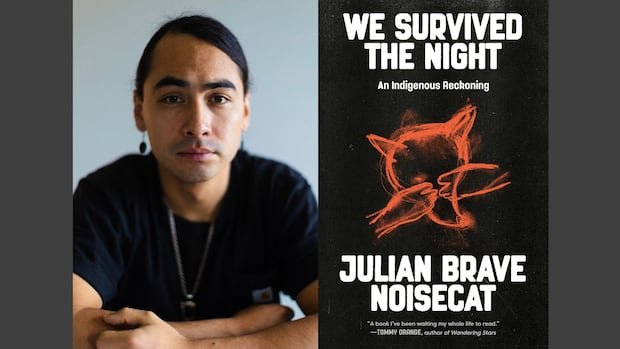

Julian Brave NoiseCat, a writer and filmmaker from the Secwépemc community, gained acclaim with his Academy Award-nominated film, “Sugarcane.” He has now ventured into the world of literature with his latest release, “We Survived the Night,” a poignant narrative that delves into his father’s story, blending oral tradition and journalistic elements.
In a recent interview, NoiseCat shared that while filmmaking came as a surprise career path, writing has always been his passion since childhood. Seeing his debut book come to fruition holds special significance for him, marking a milestone in his creative journey.
The inspiration for “We Survived the Night” stems from Secwépemc culture and language. The title echoes the traditional morning greeting, “tsecwinucw-k,” which translates to “You survived the night.” NoiseCat reflects on the resilience of his ancestors during challenging times, such as the devastating smallpox outbreak of 1863 and the era of residential schools, infusing the narrative with poetry, social commentary, and a touch of dark humor.
Central to the book is NoiseCat’s exploration of his father’s life. Raised in a dual heritage, with roots in Canim Lake Indian Reserve and New York, his father’s absence during his upbringing spurred NoiseCat to seek understanding and reconciliation through writing. Living with his father for two years while crafting the memoir became a transformative experience, fostering healing and a renewed bond between them.
The book’s cover features a portrayal of the trickster Coyote by Salish artist Jaune Quick-to-See-Smith, titled “Coyote Sees the World Clearly.” This artwork, a poignant symbol of introspection and clarity, holds additional significance as Quick-to-See-Smith’s final permission for its use was granted to NoiseCat shortly before her passing.
Through “We Survived the Night,” Julian Brave NoiseCat not only shares a personal journey of reconciliation and understanding but also revives traditional storytelling methods, preserving cultural heritage in the face of historical challenges.