
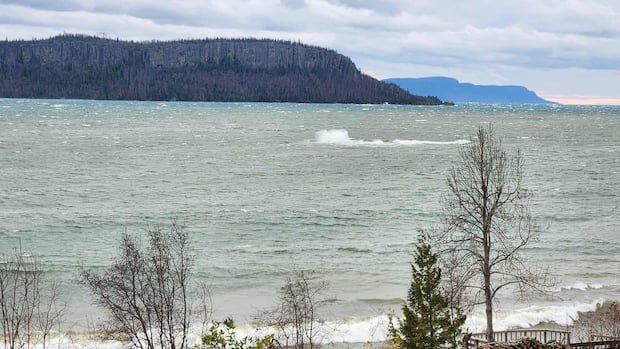

In late October, the National Oceanic and Atmospheric Administration (NOAA) reported that Lake Superior’s water temperatures were nearly three degrees Celsius higher than the average historical temperature. On October 20, the typical temperature for Lake Superior is 8.8 degrees Celsius. However, this year, the water surface registered 11.6 degrees Celsius, marking the second-highest temperature ever recorded on that date. The warmest temperature for October 20 was recorded in 2021.
Unusually mild autumn weather transformed October into what felt more like August in northwestern Ontario, breaking several daytime temperature records by up to nine degrees Celsius. This unseasonable warmth has contributed to keeping Lake Superior relatively warm for this time of year, continuing a trend that affects underwater ecosystems and coastal weather patterns.
Physical oceanographer and University of Minnesota Duluth professor, Jay Austin, has been studying seasonal temperature variations for years. He mentioned that warm air temperatures significantly influence Lake Superior. Austin highlighted that warm air temperatures result in a slower cooling rate for the lake, a predictable outcome. Over the past four decades, water temperatures in Lake Superior have been gradually rising, impacting ecosystems and potentially fostering algae blooms.
According to Great Lakes Integrated Sciences and Assessment (GLISA), Lake Superior is among the fastest-warming lakes globally. This warming trend is partly attributed to earlier spring ice melts, leading to longer periods of lake stratification and increased exposure to solar radiation. GLISA’s data shows that summer surface temperatures on Lake Superior have risen by an average of 2.5°C between 1979 and 2006.
Margueritte Xenopoulos, a professor at Trent University and Canada Research Chair in Global Change of Freshwater Ecosystems, along with her research colleagues, advocates for increased winter scientific research on the Great Lakes to anticipate future changes. Xenopoulos emphasized the need to predict rising nutrient runoff into the Great Lakes due to warmer weather, as this could impact drinking water safety for the millions of people living around the lakes. Understanding these environmental shifts will be crucial in adapting to climate change effects and mitigating potential negative consequences.
By gathering more knowledge about the ongoing transformations in and around lakes like Superior, communities can better prepare and safeguard their natural resources against the impacts of climate change.